Sea freight invoices: make transparency your edge
Finally, the container has arrived. Then comes the invoice. On top of the agreed freight rate sits a string of surcharges: 'Terminal Handling Charges', 'ISPS', 'documentation costs'. And sure enough: hundreds of euros over budget again. If you're a supply chain or procurement manager, you probably recognize this frustration. You're responsible for the budget, but how do you control it when costs fly in every direction? This isn't just an administrative headache; it puts pressure on your cash flow, inventory planning, and the reliability you promise your customers. This lack of control is no coincidence. It's a business model that forwarders know well. But there is a solution. Real control over your supply chain starts with full financial control over every shipment.
%20(1)%20(1)%20(1)%20(1)%20(1).webp)

The illusion of visibility: a dot on a map isn't control
Many forwarders offer track & trace as the solution. But with a dot on a map, you're always one step behind. It shows that your container is stuck, but it hides the financial cause you could have prevented. Real control is proactive: preventing a shipment from getting stuck in the first place.
Example from practice: An importer sees his container sitting in the port for three days already. What he doesn't know is that there's an outstanding local invoice of €200 that no one flagged proactively. By the time it's resolved, the demurrage invoice has climbed to €450. The tracker showed the location, but not the financial problem that caused the delay.
The anatomy of an opaque sea freight invoice
The traditional forwarding model thrives on a lack of clarity. The profit often isn't in the sea freight itself, but in a series of vague or inflated surcharges that only surface afterwards. A sharp base rate is the bait; the real costs follow later.
Top 5 hidden costs
1. Local port and terminal costs (THC): Costs for loading and unloading, often charged with a hidden markup. So you're not just paying for the handling, but also an extra margin for your forwarder.
2. Documentation and administration costs: A vague catch-all for 'costs' that are hard to verify and can easily add €50 to €100 to the final invoice.
3. Fuel and environmental surcharges (BAF/LSS): These rates fluctuate. Without insight into when they're calculated, a forwarder can easily add extra margin here.
4. Customs clearance costs: Unexpected costs due to so-called 'complexity', which could often have been avoided with clear communication about the required documents.
5. Demurrage & detention: Perhaps the most expensive cost item. Fines for containers that stay in port too long or aren't returned on time. For a 40ft container in Rotterdam, these can quickly add up to €150 per day. You only hear about it once it's too late.
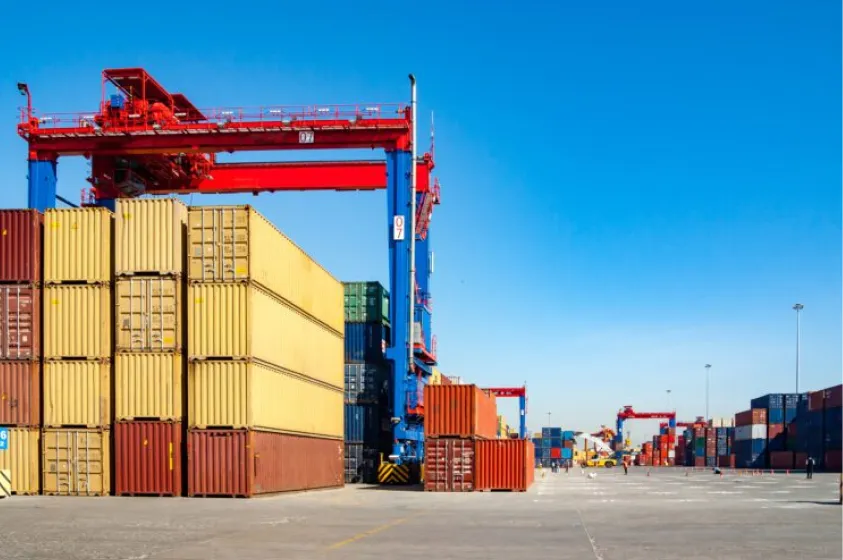
The pitfall: why a 'port-to-port' quote is often misleading
An extremely low sea freight rate almost always comes with a 'port-to-port' quote. It looks appealing, but deliberately leaves out all the unavoidable costs at the destination, such as THC and customs clearance. The final invoice is guaranteed to be higher. So always ask for a complete 'door-to-door' quote for a fair and realistic picture.
Your strategy: 3 steps to full financial control
Take back control with this immediately applicable step-by-step plan.
Step 1: Demand a fully itemized all-in quote
This is the single most important step. Never accept a quote that doesn't break down every cost item. A refusal is a red flag; it shows the forwarder depends on a lack of clarity to make a profit.
[Tool: The essential quote checklist]
Explicitly ask whether the following costs are included:
● Sea freight (including BAF/LSS)
● Origin THC (Terminal Handling Charges)
● Export documentation & customs formalities
● Destination THC
● Import documentation & customs formalities
● Delivery costs (for door-to-door)
Step 2: Compare on total costs and risks
The cheapest quote is rarely the best. Compare providers on three criteria:
1. Total costs: All the items from the checklist added together.
2. Transit time: How many days is the container underway?
3. Number of transshipments: Every transfer to another vessel is a risk of delay.
A route that's €200 cheaper but takes a week longer ultimately costs you more through delays and extra inventory costs.
Pro tip: If calculating total costs takes up too much time, there are alternatives that can help, such as comparison platforms.
Step 3: Build a financial archive per shipment
Create one central folder per shipment (for example in Google Drive or SharePoint). Consistently store all quotes, bookings, the Bill of Lading, and the corresponding invoices in it. This becomes an airtight financial archive that gives you a rock-solid position in invoice disputes.
The next step: how technology enforces transparency
Carrying out this three-step plan manually is a crucial first step. To scale this process and prevent errors, technology is the logical next step. It makes transparency the standard, not the exception.
A platform like Cargoplot is designed to automate this process for you:
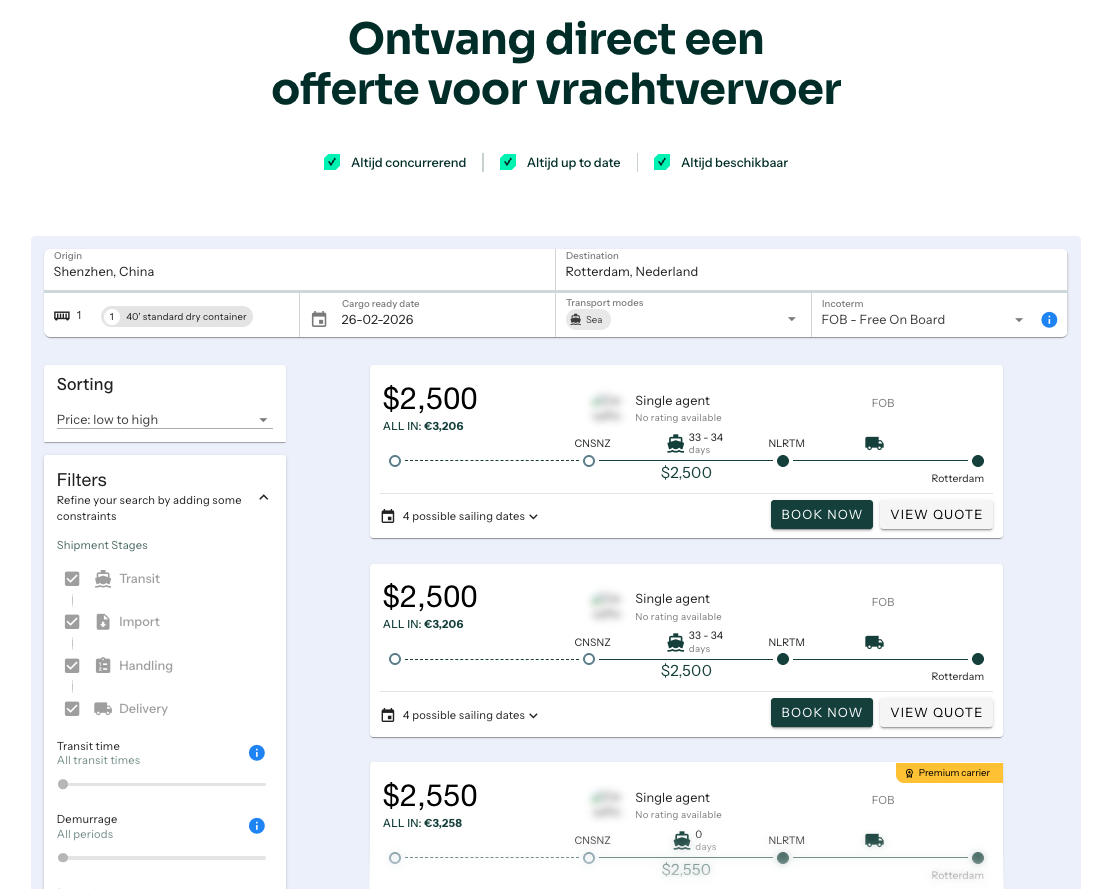
● Guaranteed all-in quotes: The platform offers fully itemized quotes. A lack of clarity is technically impossible because every part of the chain is transparent.
● Objective comparison: All quotes are presented in a standardized dashboard. With one click, you objectively compare total costs, transit time, and carrier reliability.
● Centralized archive: Every shipment gets its own dashboard where all documents and communication are automatically recorded. This way, you effortlessly build a watertight financial archive.
Our promise: The invoice you receive from us is exactly the same as the approved quote. No surprises, no vague surcharges. Ever.
Conclusion: from a lack of clarity to competitive advantage
Unpredictable costs aren't a given, they're a choice. By demanding financial transparency, you turn a source of stress into a strategic advantage. The result: predictability, more efficient operations, and fair costs. You have the knowledge, now take control.
You have the strategy, Cargoplot has the technology. Book a no-obligation demo and we'll show you live where the hidden costs in your supply chain are lurking. No vague promises, just clear data and a concrete action plan.
Frequently asked questions about sea freight invoices
Why does the final sea freight invoice often turn out higher than the quote?
This happens because many forwarders use a business model in which the base price is deliberately kept low to attract customers. The real profit is then made through a series of vague or inflated surcharges that only appear on the invoice afterwards, such as 'Terminal Handling Charges', 'ISPS', and various administrative costs. As a result, the actual costs often end up hundreds of euros over budget.
Is track & trace enough for full control over a shipment?
No, track & trace only functions as a 'dot on a map'. The system does show that a container is stuck, but it hides the financial cause, such as an outstanding local invoice. As a result, you're always one step behind. Real control is proactive and means preventing a shipment from getting stuck in the first place, by having full financial insight in advance.
What are the most common hidden costs in sea freight?
The five most common hidden cost items are:
1. Local port and terminal costs (THC): Often charged with a hidden markup.
2. Documentation and administration costs: A vague catch-all for extra costs.
3. Fuel and environmental surcharges (BAF/LSS): Fluctuating rates where margin gets added.
4. Customs clearance: Unexpected costs due to so-called complexity.
5. Demurrage & detention: Expensive fines for containers that stay in port too long.
Why is a 'port-to-port' quote often misleading?
A 'port-to-port' quote looks attractive at first glance because of the extremely low sea freight rate, but this gives a distorted picture. These quotes deliberately leave out unavoidable costs at the destination, such as THC and customs clearance. As a result, the final invoice is guaranteed to be higher. For a fair and realistic picture, a complete 'door-to-door' quote is necessary.
How can you gain financial control over the supply chain?
Financial control starts with demanding a fully itemized all-in quote; quotes that don't break down costs should be refused. Next, it's important to compare providers not just on price, but on total costs and risks. Finally, it's crucial to build a central financial archive per shipment, in which all documentation, from quote to invoice, is consistently stored.
What should you pay attention to when comparing quotes?
It's important to look beyond just the base price. A good comparison is based on total costs (including all surcharges), transit time, and the number of transshipments. Every transshipment increases the risk of delay. A route that looks cheaper on paper but takes longer can end up more expensive overall due to delays and extra inventory costs.
How does technology contribute to cost transparency?
Technology and comparison platforms can enforce transparency by automating the quote and booking process. This makes it possible to receive guaranteed all-in quotes where the invoice is exactly equal to the quote. It also allows users to compare objectively on total costs, and a centralized archive is automatically built per shipment, which prevents errors and unexpected costs.
Related content


Sign up for more supply chain insights:
No spam, just knowledge.