RoRo vs. container: the smartest way to ship a vehicle
RoRo or container: functionally simple, or maximally protected? It looks like a detail, but the wrong call can cost you thousands in damage, extra handling, or delay. In this article we put RoRo and container vehicle shipping side by side — on cost, protection, flexibility, and reach. So you'll know within five minutes which method fits your vehicle, and your budget, best.

.webp)
RoRo: the base option for rolling stock
RoRo shipping (Roll-on/Roll-off) is straightforward by design. Picture it as a giant, floating parking garage: your vehicle drives on board (Roll-on), gets secured, and drives off again at the destination (Roll-off).
It's an option for standard equipment that can drive, brake, and steer — from passenger cars to campers. Efficient for a single vehicle, sure. But you do give up control: you literally hand your keys to port staff, and the vehicle has to be completely empty before it can board.
Container: the maximum-security fortress
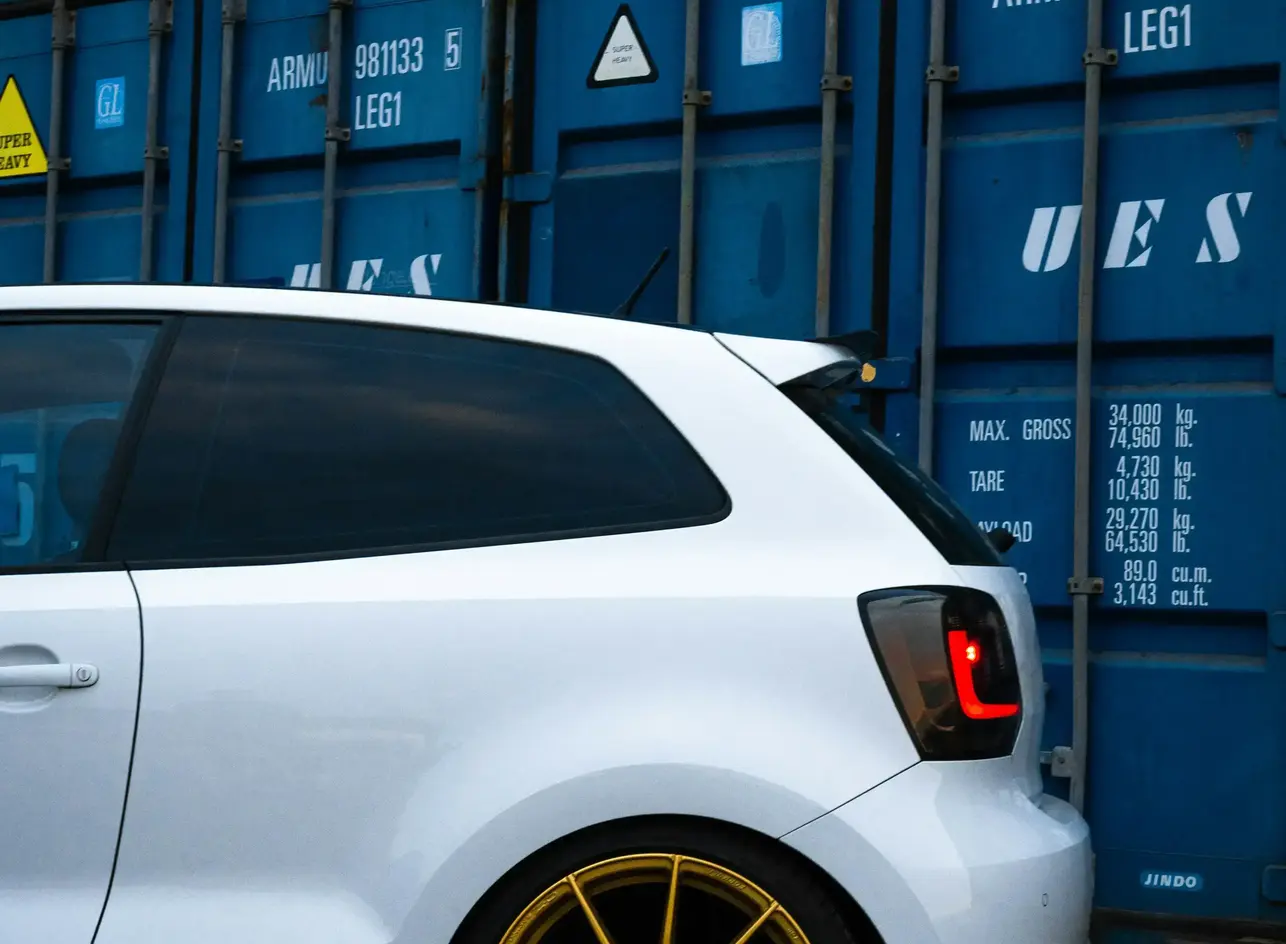
Shipping a vehicle by container means choosing the highest degree of logistical control. The vehicle is driven into a 20ft or 40ft container and meticulously secured there by professionals with industrial lashing straps and wheel chocks — a process called 'lashing'.
Once sealed, the container becomes an anonymous, secured vault. That's a critical strategic advantage: the chain of custody stays closed. The seal placed at loading isn't broken again until it reaches the final receiver. Any remaining space is yours to use, too — which often makes a Full Container Load the most efficient all-in-one solution if you want to ship more than just the vehicle itself.
RoRo vs. container: the direct comparison
Let's put the four main factors side by side.
Cost: the sum of the total logistics
RoRo: looks cheaper for a single vehicle thanks to the lower base price per m³ of sea freight — you pay by volume, not by container size. Just keep in mind: because the vehicle must be empty, costs still climb once you need to ship loose parts or extra luggage separately.
Container: you pay for the 'box', not per cubic metre. That gives price certainty, and any space you're not using for the vehicle can be filled with spare parts, tools, or part of a household move — which often makes the price per unit shipped work out better anyway. Curious how freight rates like these get calculated?
Real-world example: shipping a Mercedes G-Class from Rotterdam to Dubai. Via RoRo, you'd pay based on volume (roughly 15 m³), which lands around €1,200. A 20ft container for the same route, including loading and securing, is closer to €2,200. For that premium, you buy back maximum protection and flexibility. Note: these are illustrative reference prices — actual rates vary by route, season, and carrier. Always request a current quote before making a final decision.
Protection: full control vs. external risk
RoRo: the decks are secured, but your vehicle is driven and moved by multiple port staff. That raises the risk of parking damage and makes loose interior items more vulnerable to theft.
Container: offers superior protection against weather, salt water, and theft. Because no one has access to the interior or engine bay during transit, this is really the only logical choice for valuable classics, race cars, or delicate machinery.
Flexibility: a multimodal all-in-one solution
RoRo: you're limited to the rolling vehicle only. The journey also often ends at the port — onward transport inland usually means arranging separate handling all over again.
Container: a container is the ultimate all-rounder. Non-drivable project cars, extra stock, or tools? It all fits. A container can also go straight onto a truck or train after arrival for seamless door-to-door transport.
Destinations: worldwide reach
RoRo: you're tied to a limited number of specialised RoRo terminals. No RoRo terminal at your destination? Then that's the end of the road.
Container: the global container network is far more extensive. Wherever your vehicle needs to go, there's almost always a container that can get it there.
Comparison table

Choosing container or RoRo: clarity in 30 seconds
No more doubt. Pick the method that fits your vehicle and your priorities.
Choose a container if:
- Maximum protection and risk reduction are your top priority.
- You want control over who touches the vehicle (seal-to-seal).
- You want to ship extra goods, parts, or tools alongside it.
- You have a non-drivable vehicle, or a destination deep inland.
Choose RoRo only if:
- The absolute lowest price for an empty, standard vehicle is your only driver.
- The risk of minor damage from extra handling is acceptable to you.
Make the smartest choice, not the easiest one
In the opaque world of logistics, forwarders often push whichever option is easiest for them — not necessarily the one that best fits your cargo. Want to know how to spot that? Read up on comparing freight forwarders and finding a reliable freight forwarder.
At Cargoplot we believe in the method that fits you: safe, complete, and on your terms. On the Cargoplot platform, you compare rates, sailing schedules, and the safety advantages of container carriers directly against RoRo options — fully transparent, margin included.
That same principle — comparing and choosing for yourself, instead of letting one party decide for you — is also, by the way, exactly why we generally recommend FOB for the ocean freight leg of your import: it puts you, not your supplier or their forwarder, in charge of picking the carrier.
Take back control: calculate your shipping costs or book a demo with one of our specialists.
Compare rates, sailing schedules, and the safety advantages of RoRo and container carriers side by side on the Cargoplot platform — margin included. Prefer to talk it through? Book a demo with one of our specialists.
Frequently asked questions about roro vs container
What is RoRo shipping and how does it work?
RoRo (Roll-on/Roll-off) is a shipping method where vehicles drive on board under their own power (Roll-on), get secured, and drive off again on arrival (Roll-off). It suits standard, drivable vehicles and is often the cheapest option for a single vehicle — though you give up some control, since the vehicle must be empty and is driven by port staff.
What is container shipping for vehicles?
With container shipping, your vehicle is placed inside a 20ft or 40ft container and secured by professionals using lashing straps and wheel chocks ('lashing'). The container is sealed at loading and stays a secured, anonymous vault until it reaches the receiver — giving you maximum protection and full control over the chain of custody. Any remaining space can be used for parts, tools, or household items.
What are the main advantages of container shipping over RoRo?
Container shipping offers several advantages: maximum protection against damage, theft, and weather; the ability to ship extra goods alongside the vehicle; and seamless door-to-door transport after arrival. Thanks to the global container network, almost any destination is reachable — a real advantage for valuable vehicles.
When should you choose a container over RoRo, and vice versa?
Choose a container when maximum protection and risk reduction are the priority, you want full control over who touches the vehicle (seal-to-seal), you want to ship extra goods or tools alongside it, or your vehicle can't drive or is headed somewhere deep inland. RoRo works well when the absolute lowest price for an empty, standard vehicle is your main criterion and the risk of minor handling damage is acceptable to you.
How does the RoRo network compare to the container network?
RoRo is limited to a select number of large, specialised terminals. The container network is available almost worldwide, making containers considerably more flexible if your destination doesn't have a major RoRo port.
Related content




Sign up for more supply chain insights:
No spam, just knowledge.