Types of inland barges: which vessel fits your cargo?
A Kempenaar, a large Rhine vessel, or a push-tow convoy? It sounds like a planning detail, but picking the wrong type shows up as cost you only spot on the final invoice. Knowing which vessel fits your volume and destination is the difference between a predictable inbound flow and an expensive, chaotic surprise. In this article you'll learn the main types of inland barges, including the cost and flexibility of each type, so you can make the choice that actually strengthens your supply chain.
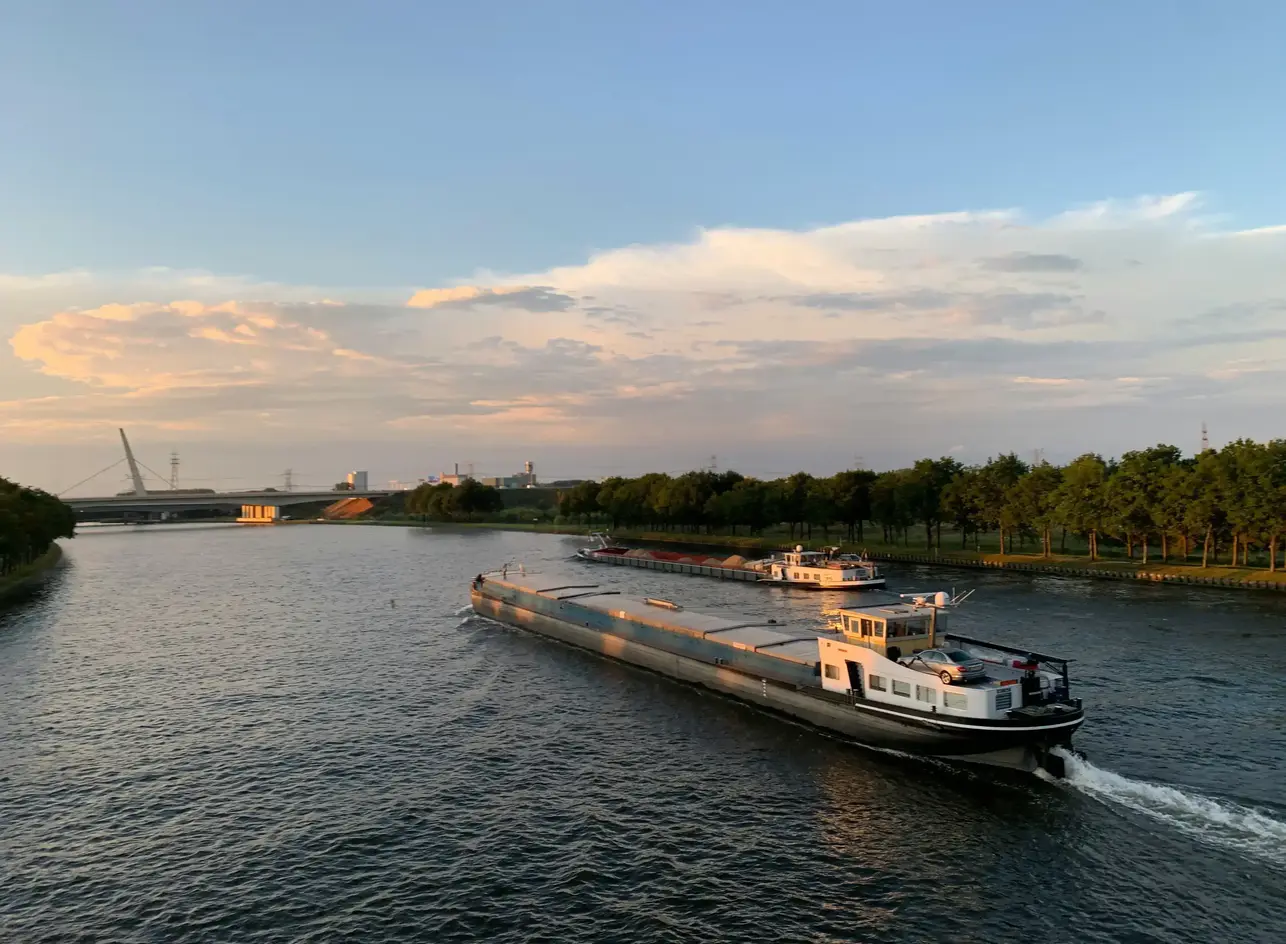


Types of inland barges: Kempenaar, Rhine vessel and push-tow convoy
The inland shipping fleet is diverse, and each of the types of inland barges has a direct effect on your supply chain. Pick the wrong vessel type, and it can undermine your entire import strategy. Below are the three types you'll run into most often as an importer bringing cargo from Asia into Benelux or NRW.
The Kempenaar/Spits — the flexible specialist. Its limited dimensions get it into places larger inland barges can't reach. What this means for your shipment: ideal for smaller volumes (LCL) or FCL deliveries to regional terminals further inland. You pay for precision and reach, not bulk volume.
The large Rhine vessel — the workhorse for FCL. The backbone of container transport on major rivers like the Rhine, with a capacity of 100 to 400 TEU. What this means for your shipment: the obvious choice for cost efficiency on major corridors like Rotterdam-Duisburg. The condition is a destination at a large inland terminal.
The push-tow convoy — the volume king. A pusher tug with multiple barges moving over 500 TEU combined: barging at industrial scale. What this means for your shipment: the lowest cost per TEU, but only worthwhile for large, constant volumes to a single central hub. Transit time can be longer, since consolidating volume takes time.
Comparison: cost and flexibility per vessel type
Here's a quick cheat sheet to see the differences at a glance.
.webp)
Why the lowest slot price is often the most expensive option
Now that you know the vessel types, here comes the step that matters most — and where most importers go wrong. They fixate on the "slot price," the price for one container on the vessel. A classic mistake.
The lowest price per container is not the same as the lowest total landed cost. I see it every week: an importer picks the cheapest barge, which sails to a terminal 50 kilometers further from the final destination. Result: the savings on the water evaporate completely into the extra cost of the last-mile truck ride. You see the same trap when comparing freight forwarders: the lowest quote on paper is rarely the lowest bill in practice.
Add the cost of unpredictability on top. A truck looks faster, but anyone who's sat on a jammed highway during rush hour knows better. An inland barge liner service runs on a fixed schedule, with punctuality of over 98%. That predictability is worth money.
"This is why at Cargoplot we show the all-in price with every line detailed, from port to door. No hidden terminal fees, no surprise trucking surcharges. Radically transparent, right down to our margin."
From reactive phone calls to proactive control
Coordinating the ocean vessel, the terminal, customs, the barge, and the final truck is the biggest hidden cost. The traditional process is reactive: the vessel arrives, and the frantic phone calls begin.
The smart approach is proactive, with technology as an ally. Instead of juggling multiple freight forwarders and endless email threads, a digital platform centralizes all of that communication. You move from fragmented chaos to a single dashboard where the whole shipment is visible, from Shanghai to your warehouse door.
The result? Your team no longer has to fight fires — it stays in control. Transit times become predictable, and the risk of handover errors disappears.
Choose your inland barge type based on data, not guesswork
Choosing an inland barge is not an operational detail — it's a strategic decision. Knowing the types of inland barges helps you stop guessing on incomplete data and take back control.
That same logic — look past the lowest price and keep control yourself — is also why, for the ocean leg itself, we usually advise FOB: it lets you choose the carrier yourself for the most expensive, most decisive link in the chain, instead of leaving that choice to your supplier.
Stop guessing on incomplete data. Compare all-in costs per vessel type directly on the Cargoplot platform and see the impact on your bottom line. Want to talk through the best choice for your cargo first? Book a demo.
Frequently asked questions about types of inland barges
Which of the types of inland barges suits my cargo?
The right choice depends entirely on your volume and destination. The Kempenaar (or Spits) is the flexible specialist for smaller volumes and regional terminals, while the large Rhine vessel is the workhorse for FCL transport on major routes like Rotterdam-Duisburg. For huge, constant volumes to a single central hub, the push-tow convoy is the best option among the various types of inland barges, since it offers the lowest cost per TEU.
Why isn't the lowest price per container (slot price) usually the cheapest option?
Many importers only look at the price on the water and forget the total landed cost. A cheap barge that sails to a terminal 50 km from your final destination ends up more expensive once you add the costly last-mile truck ride. The unpredictability of cheaper options also tends to cost money.
Is inland shipping more reliable than road transport?
Generally, yes. Where trucks are exposed to daily traffic jams and driver shortages, inland barge liner services run on a fixed timetable, with high punctuality. That makes for predictable planning.
How does technology help lower logistics costs?
By centralizing coordination. The traditional process is reactive: phone calls to various parties once something goes wrong. With the right technology, you manage the entire chain — from ocean vessel to warehouse — in one dashboard. That eliminates chaos, makes transit times predictable, and stops your team from constantly firefighting.
Related content



Sign up for more supply chain insights:
No spam, just knowledge.