Shipping from Kaohsiung to Rotterdam
Terminal 7 runs on AGVs and remote-controlled cranes — Taiwan's first fully automated container terminal, handling about two-thirds of the island's volume — shipping from Kaohsiung to Rotterdam is benchmarked weekly against Cargoplot's live carrier and pricing data.


0
%
vs last month
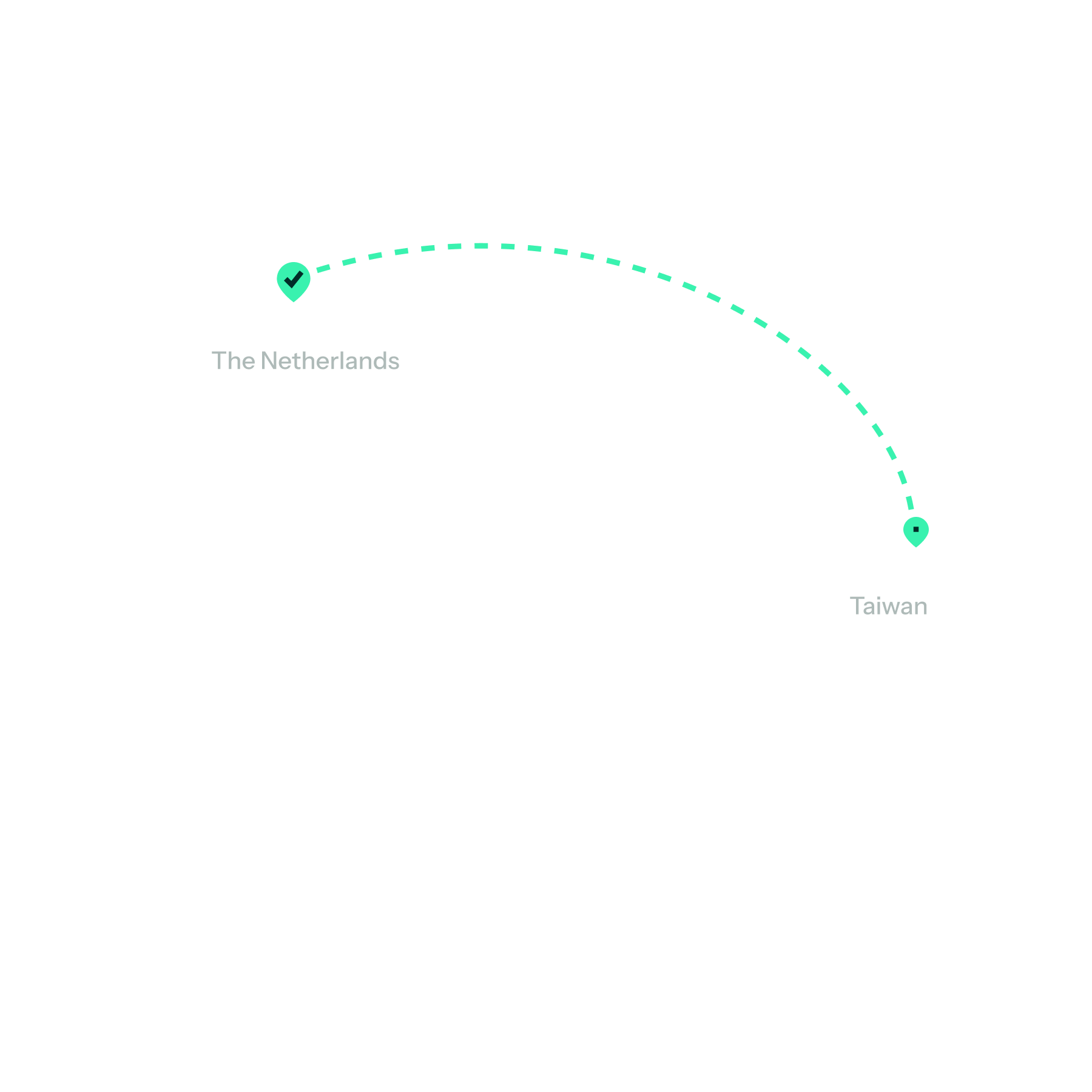
Port of KaohsiungPort of Rotterdam
Shipping from Kaohsiung to Rotterdam usually loads at Taiwan's largest port, which handled roughly 9.2 million TEU in 2024 — about two-thirds of the island's container volume. Terminal 7, Taiwan's first fully automated container terminal, runs on AGVs and remote-controlled cranes, while the newest berths reach 18 metres of draft.
At Rotterdam, deep-sea berths run to 20 metres, and according to Cargoplot's data, average import clearance on this lane is 4.57 days — slower than most Asia lanes, consistent with the smaller, consolidated shipments that dominate here. Machine tool and bicycle parts typically continue by road to German manufacturing hubs. Every consignee needs an EORI number to clear customs.
Bicycle components, hand tools and machine tool parts dominate sea freight from Kaohsiung — small-batch, high-value goods from Taiwan's specialist manufacturers, which is exactly why a freight forwarder handling this lane's transit time sees LCL outweigh full-container volume.


Historical Rate Trends & Transit Metrics
Multi-year sea freight pricing fluctuation alongside average transit times and port delay performance for Kaohsiung to Rotterdam. Currently the average shipping price is $3,700/FEU, average transit time is 63 days with an average arrival delay of 7 days.
Historical sea freight prices for this route

across all
active carrier
s
at
at
Operations & Route Performance Review
Analyze weekly port congestion, container type availability, shipment mode breakdowns, and historical transit duration trends to optimize logistics planning. At the moment the transit time stands at 63 days.
Weekly Delay & Congestion
FCL vs LCL
A lane where LCL typically dominates, reflecting Taiwan's small-batch bicycle, hand tool and machine tool component manufacturers who rarely fill a full container alone. Among the FCL minority, 40'HC is the leading container type. But at this lane's LCL share, the usual ~20 CBM breakeven works against most Kaohsiung shipments rather than for them. Cargoplot's platform helps you see whether consolidating with LCL or booking FCL actually saves money on your specific volume.
From $
/CBM
Container Types & Cargo Restrictions
LCL consolidation covers most Kaohsiung shipments, with 40'HC the container of choice among the FCL minority. Machinery compliance is the restriction that matters most here: machine tools and equipment need CE marking and an EU Declaration of Conformity under the EU Machinery Regulation before sale, and e-bike components with lithium batteries ship under IMDG Class 9 (UN3481) with UN38.3 testing and dangerous goods documentation. Miss either and it's a customs hold or a straightforward refusal to load.
Monthly Transit time Trend
Carrier Benchmarking & Average Price by Carrier
Compare top ocean carriers on speed, schedule reliability, and average freight costs to select the best partner for your lane.
Market pricing per 40' FEU
Incoterms & Documentation
With LCL running at roughly 84% of Kaohsiung's volume, consolidation and deconsolidation charges are the real cost variable here — confirm who covers them, since neither Incoterm's standard split accounts for LCL handling by default. FOB still stays Cargoplot's recommendation on this lane: it keeps the ocean leg, and the carrier choice, in your hands once cargo is loaded. Booking it through Cargoplot gets you freight, terminal handling, customs and inland transport priced as separate lines, not folded into one supplier number.
Every Kaohsiung machine tool or equipment shipment needs a CE mark and EU Declaration of Conformity before it can be sold in the EU, and since bicycle and hand-tool components here often ship as lithium-battery e-bike parts, budget for UN38.3 battery test documentation and dangerous-goods paperwork too. Otherwise it's the standard set: Telex Release, Commercial Invoice, Packing List, Certificate of Origin and EORI number for every shipment on this lane.
Article 23 keeps this VAT out of your cash flow at the border, shifting it to your periodic return instead — worth having if you're importing into the Netherlands regularly. Our Article 23 guide explains eligibility.
Cargoplot's platform automatically requests and routes your CE marking documentation to the responsible party, with your origin agent handling battery documentation and UN38.3 approval before booking.
Calculate your sea freight costs from Kaohsiung to Rotterdam
Get a real-time benchmark for this lane. Rates pull from contracted carrier tariffs plus current spot indices.


More than 300 TEU shipped via Cargoplot
"The ability to see all our options laid out clearly allows us to be agile. If a supplier is running late, we can instantly pivot to a faster shipping line. That flexibility is invaluable and protects our sales."

Complete control over your international freight
Cargoplot provides full transparency on shipping rates, transit times, and carrier reliability. Compare live offers, streamline documentation, and manage all your containers in one clear dashboard.

Instant Comparative Quotes
Access live rates and schedules from 50+ major carriers instantly, refreshed in real time.

Global Multimodal Network
Full coverage across sea, air, and rail freight between major global trade hubs.

AI Document & Tracking Control
Eliminate manual busywork with AI document processing and 24/7 container tracking.

100% Fee & Cost Transparency
Itemized cost breakdowns with zero hidden surcharges—we even show you our exact margin.
FAQs
Here you will find the most frequently asked questions and the corresponding answers.
What is the average transit time from Kaohsiung to Rotterdam?
What does a 40' container on this route cost right now?
What is the average arrival delay for shipments from Kaohsiung to Rotterdam?
What documents do you need specifically for a shipment from Kaohsiung?
Beyond the standard set — BL/Telex, invoice, packing list, EORI, HS codes (full list here) — Kaohsiung's machine tools and equipment need CE marking and an EU Declaration of Conformity, and e-bike components with lithium batteries need UN38.3 test documentation before booking — flag either at booking since most cargo here consolidates LCL.
Why is LCL so much more common on this lane than others Cargoplot tracks?
Taiwan's bicycle, hand tool and machine tool exporters are mostly small and mid-sized manufacturers shipping parts and components, not bulk commodities. Cargoplot's data shows 84.3% LCL here — the only lane tracked so far where LCL beats FCL, reflecting that smaller-batch production reality rather than any port-specific factor.
My e-bike components include lithium batteries — what do I need?
Batteries contained in equipment ship under IMDG Class 9 (UN3481), requiring UN38.3 test certification and proper hazmat packaging and documentation. Get this cleared before booking — carriers can refuse loading or hold cargo at origin if paperwork is incomplete.
Why does clearance take longer on this lane than most other Asia routes?
Cargoplot's data shows a 4.57-day average, slower than most Asia lanes it tracks. That's consistent with LCL shipments, which need deconsolidation and separate documentation checks per consignee before release — a genuine trade-off against LCL's lower shipping cost.
How does customs clearance work on arrival in Rotterdam?
Cargoplot’s customs agent files your import declaration in the Netherlands via Direct Representation. Once approved, you get a TTW releasing the container to your transport partner. Full process in our import guide; duties and VAT thresholds here.
What is the Article 23 permit and do I need one?
Article 23 is a Dutch permit that lets you defer import VAT to your periodic return instead of paying at customs clearance — meaningful cash flow if you import regularly. You'll need a Dutch VAT/EORI registration. Full explanation in our Article 23 guide.