FCL sea freight: Lower your costs and speed up your logistics process
Is your business getting too big for LCL shipments? Then the step to a Full Container Load (FCL) is the obvious move, but it can often feel like a leap into the unknown. Fear of a confusing process, unexpected costs and vague communication keeps many businesses stuck with LCL, where their margins slowly evaporate. But that time is over. This guide is not a theoretical discussion, but a practical manual. We unravel the FCL process so you regain control, from your supplier's factory all the way to your warehouse door.
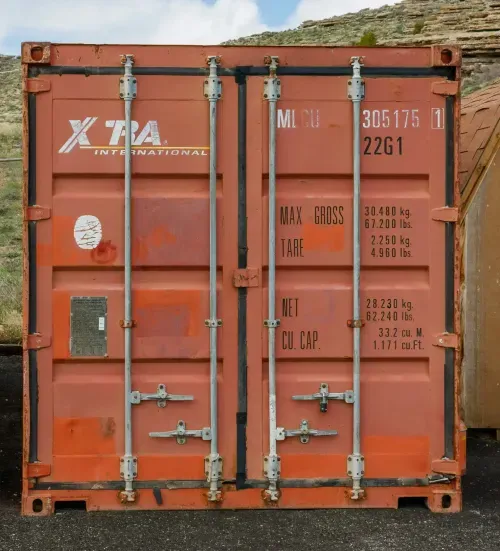


When is FCL the smartest choice?
With LCL you pay a high price per CBM; choose an FCL container and you rent the full space for a fixed amount. As a result, your cost per product drops sharply as you load more. There used to be a rule of thumb that said FCL only pays off from 15 CBM, but that's outdated. The exact tipping point for you depends entirely on the goods you want to transport. It also partly depends on container prices at that moment, which is why getting advice on volatile container prices is extremely important.
On average, the tipping point is now said to be around 20 CBM, and from that point it becomes worth checking whether it fits in a 20-foot container for FCL. But the switch is more than a simple calculation. It's a strategic step forward on three fronts:
- Cost: The most direct benefit. Once your volume passes the tipping point, you significantly lower the cost per product and immediately increase your margin.
- Safety: With FCL, your goods are loaded once and the container is sealed. That seal is only broken at your premises. This limits the number of handling movements to a minimum, and with it the chance of damage, theft or loss.
- Speed: An FCL shipment skips the time-consuming consolidation and deconsolidation process at the ports. Your container goes straight from the ship onto the truck. This can save you days, sometimes even a week, in transit time.
The FCL process in 5 clear steps
The process looks complex, but is a logical relay from booking to delivery.
- Booking & pre-carriage: You book the right container (20ft, 40ft, or 40ft High Cube). An empty container must be at your supplier's premises on the agreed date.
- Loading & documentation: Your supplier loads the goods and seals the container. At the same time, the crucial documents must be drawn up: the Bill of Lading (the title document), the commercial invoice (for the customs value) and the packing list (the detailed contents).
- Sea freight: The full container goes to the port, is cleared for export, and loaded onto the vessel. The journey begins.
- Arrival & customs clearance: As soon as the FCL sea freight to the Netherlands arrives (for example via the port of Rotterdam), the agents use your documents for the import declaration. Customs calculates any import duties and VAT.
- On-carriage: Once customs releases the shipment, the container is loaded onto a truck or barge and driven or sailed to your warehouse for unloading.
The Cargoplot choice: Why FOB gives you control
Who is responsible for which step and who pays for what? That is determined by Incoterms. For imports from Asia, there's one that gives you the most control and the fewest surprises:
FOB (Free On Board)
With FOB, your supplier is responsible for all local costs and handling until the container is on board the ship. From that moment on, you take full control. You choose the shipping line and have the sea freight route in your own hands. Choose FOB and keep control of your costs.
From complexity to full control
Knowing the FCL process is one thing. Executing it efficiently is another. The traditional logistics world makes it unnecessarily difficult with opaque quotes and endless email exchanges.
At Cargoplot, we do things differently. On our platform you compare all-in FCL rates directly. You see exactly what you pay, including our own margin. Every shipment has its own dashboard where all documents and communication come together. No more uncertainty; you follow every step live.
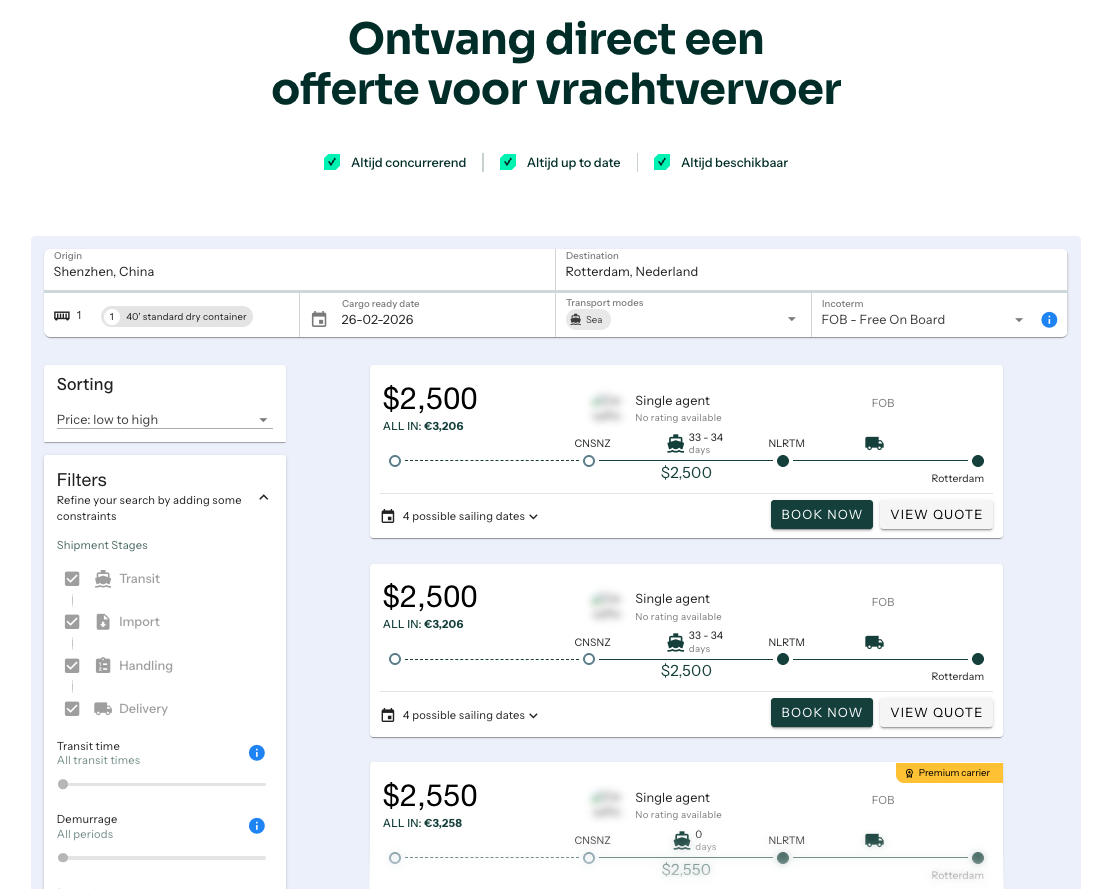
An FCL shipment isn't a cost item to manage. It's a strategic advantage that lets your business grow faster, more efficiently, and more profitably.
Stop the endless emailing. Compare current all-in rates for your FCL container directly and arrange your transport from port to door without hidden costs.
Frequently asked questions about FCL
When is FCL a smart choice?
FCL (Full Container Load) becomes attractive when your shipment is large enough that renting a whole container is cheaper per product than LCL. The tipping point averages around 20 CBM, heavily dependent on your goods, container prices and expert advice. FCL offers lower cost per product, more safety and faster delivery.
Which Incoterm gives the most control with FCL?
FOB (Free On Board). The supplier arranges all local costs and handling until the container is on board the ship. After that you take full control, including the choice of shipping line and sea freight, so you keep control over costs and risks.
What are the advantages of FCL over LCL?
FCL offers several advantages over LCL. First, costs per product drop once you have sufficient volume, increasing your margin. FCL also increases safety, because goods are loaded only once and the container is sealed, limiting the risk of damage, theft or loss. Finally, FCL saves time, because the consolidation and deconsolidation process at the ports is skipped, which can shorten transit time by several days to a week.
How does the FCL process run from start to finish?
The FCL process consists of five clear steps. First, the container is booked (20ft, 40ft or 40ft High Cube) and delivered to the supplier on time for pre-carriage. The supplier then loads the goods and seals the container, while important documents such as the Bill of Lading, commercial invoice and packing list are drawn up. The full container then goes to the port, is exported and loaded onto the ship for sea freight. On arrival, agents handle customs clearance, including the calculation of import duties and VAT. Finally, after customs releases the shipment, the container is transported by truck or barge to your warehouse for unloading.
Related content


Sign up for more supply chain insights:
No spam, just knowledge.