TEU Container Dimensions and Volume: 20ft vs. 40ft Explained
Three quotes, three pricing structures, and no idea which is the best deal? This is the reality of sea freight. The TEU is the universal key to deciphering this chaos. In this article, we explain everything about the TEU, the corresponding container dimensions, and the crucial tipping point between FCL and LCL. This way, you can compare every quote fairly and take full control of your logistics costs.

.webp)
You know the frustration: three quotes for your shipment from Shanghai to Rotterdam, three completely different pricing structures. One offers an all-in price per container, another a CBM rate with a long list of vague surcharges. It's like comparing apples and oranges, and it feels like you're making a decision in the dark.
This is no coincidence; it's a symptom of the opaque container shipping market. The solution is simpler than you think and starts with three letters: TEU. Don't see the TEU as jargon, but as the universal measuring stick for sea freight. It's the only standardized unit that allows you to reduce every quote to a comparable value. Speak the language of the TEU, and you'll take back control.
What is a TEU?
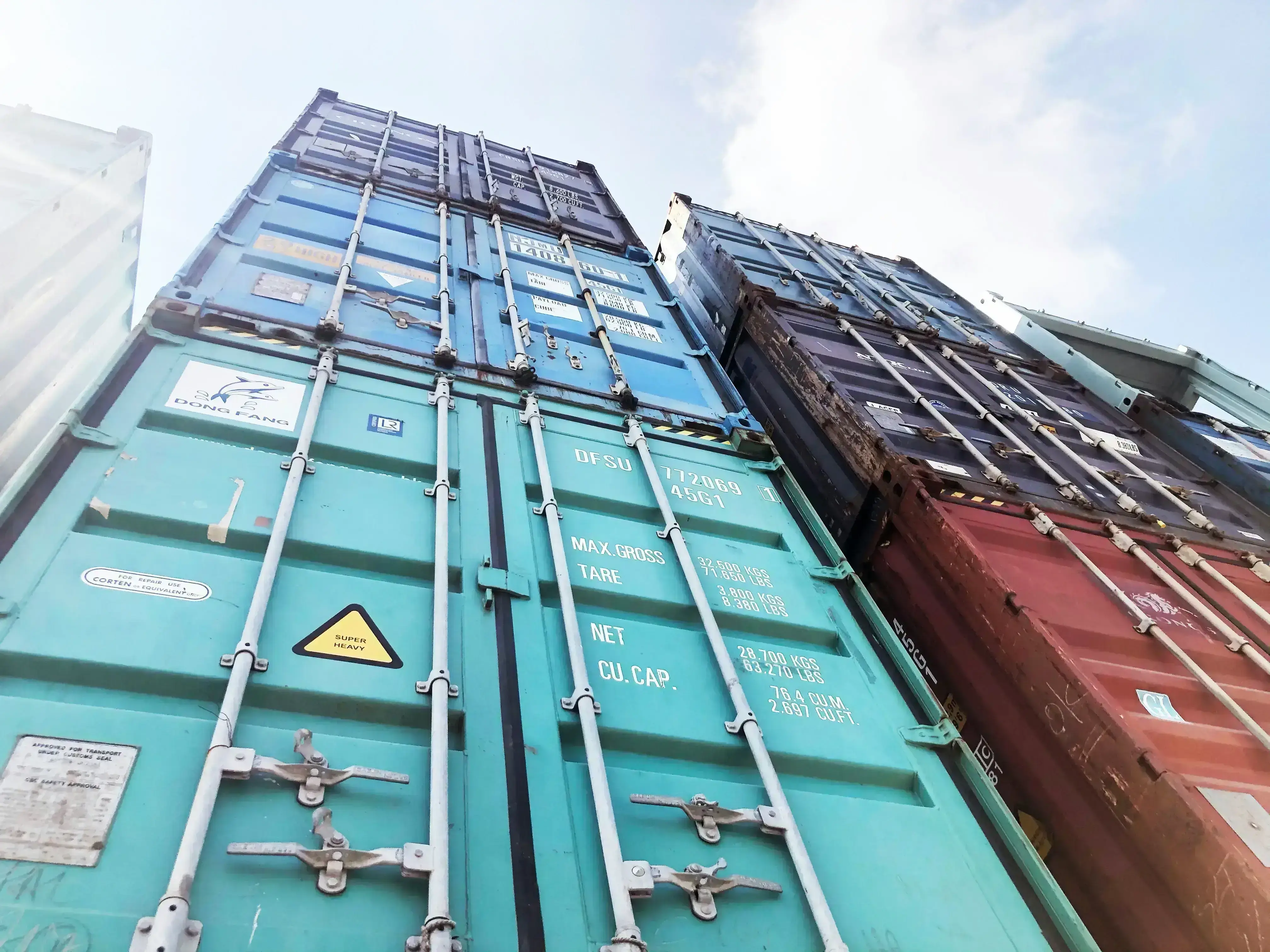
TEU stands for Twenty-foot Equivalent Unit. It is the measurement of a standard 20-foot container, the fundamental building block of global trade. By converting every shipment and container to TEU, you create a standardized basis to objectively evaluate quotes.
TEU container dimensions and load volume
The TEU value is directly linked to the physical container. The two most common types are the 20ft and 40ft containers. Although the external dimensions are standard, what matters most to you is the realistic load volume in cubic meters (CBM).
- A 20ft container = 1 TEU
- A 1 TEU container has a realistic load volume of approximately 28-30 CBM. This is the maximum space you can practically fill with goods.
- A 40ft container = 2 TEU
- A 2 TEU container has a realistic load volume of approximately 58-60 CBM.
These figures are your anchor point for every logistics decision.
FCL vs. LCL: Calculate your tipping point
Using the TEU as a measuring stick, you can make the most important strategic choice: FCL or LCL?
- FCL (Full Container Load): You book an entire container (a 1 TEU container or 2 TEU container) exclusively for your goods. You pay a fixed price for the container.
- LCL (Less than Container Load): You share container space with other shipments and pay per cubic meter (CBM) or per ton.
This is where smart calculation comes into play. There is a tipping point where a partially empty FCL container becomes cheaper than a large LCL shipment. This is your secret weapon to reduce costs.
A concrete example: Imagine you have a shipment from Shanghai to Rotterdam. The LCL rate is €75 per CBM, and a 20ft (1 TEU) container costs €1500.
- Scenario 1: Shipment of 18 CBM
- LCL costs: 18 CBM x €75 = €1350
- FCL costs: €1500
- Conclusion: LCL is €150 cheaper.
- Scenario 2: Shipment of 22 CBM
- LCL costs: 22 CBM x €75 = €1650
- FCL costs: €1500
- Conclusion: FCL is now €150 cheaper.
The tipping point here is around 20 CBM. By booking your own FCL container, even if it's not completely full, you save money. This effect becomes even stronger when you factor in fixed surcharges (like THC, documentation fees), which are often proportionally lower for FCL.
*Disclaimer: The figures above are for illustrative purposes only. Rates are volatile and fluctuate daily based on market conditions, fuel prices, specific routes, and volumes. No rights can be derived from this example. For an exact price for your shipment, we recommend running a current calculation on our platform.
The solution: Direct insight into the best option
The analysis above takes time and discipline. At Cargoplot, we believe this shouldn't be your job. Our platform is built to solve this complexity for you.
You simply enter your shipment, and our system instantly calculates the most cost-effective options, for both FCL and LCL, and presents them in a clear, objective overview. No calculations, no hidden costs. You immediately see where the tipping point lies for your specific shipment. Transparency is so deep in our DNA that we even show our margin on every shipment. This way, you can be sure you're not only getting the best price but also the fairest deal.
Enter your shipment on the Cargoplot platform, and our system will immediately calculate the most cost-effective option, for both FCL and LCL. No hidden costs, no manual calculations. Just 100% transparency and the fairest price.
Frequently Asked Questions about TEU container dimensions
What is a TEU?
TEU stands for Twenty-foot Equivalent Unit. It is a standard unit of measurement in shipping, equivalent to the dimensions of one 20-foot container.
What are the dimensions and volume of a 1 TEU container?
A 1 TEU container is a 20-foot container. Although the external dimensions are standardized, the practical load volume is what's most important: it's around 28 to 30 cubic meters (CBM).
When is FCL cheaper than LCL?
FCL becomes cheaper than LCL when the total cost of your LCL shipment (price per CBM x number of CBMs) exceeds the fixed price of a full FCL container. This tipping point depends on current rates.
Related content




Sign up for more supply chain insights:
No spam, just knowledge.