Barging for last-mile delivery: the numbers that matter
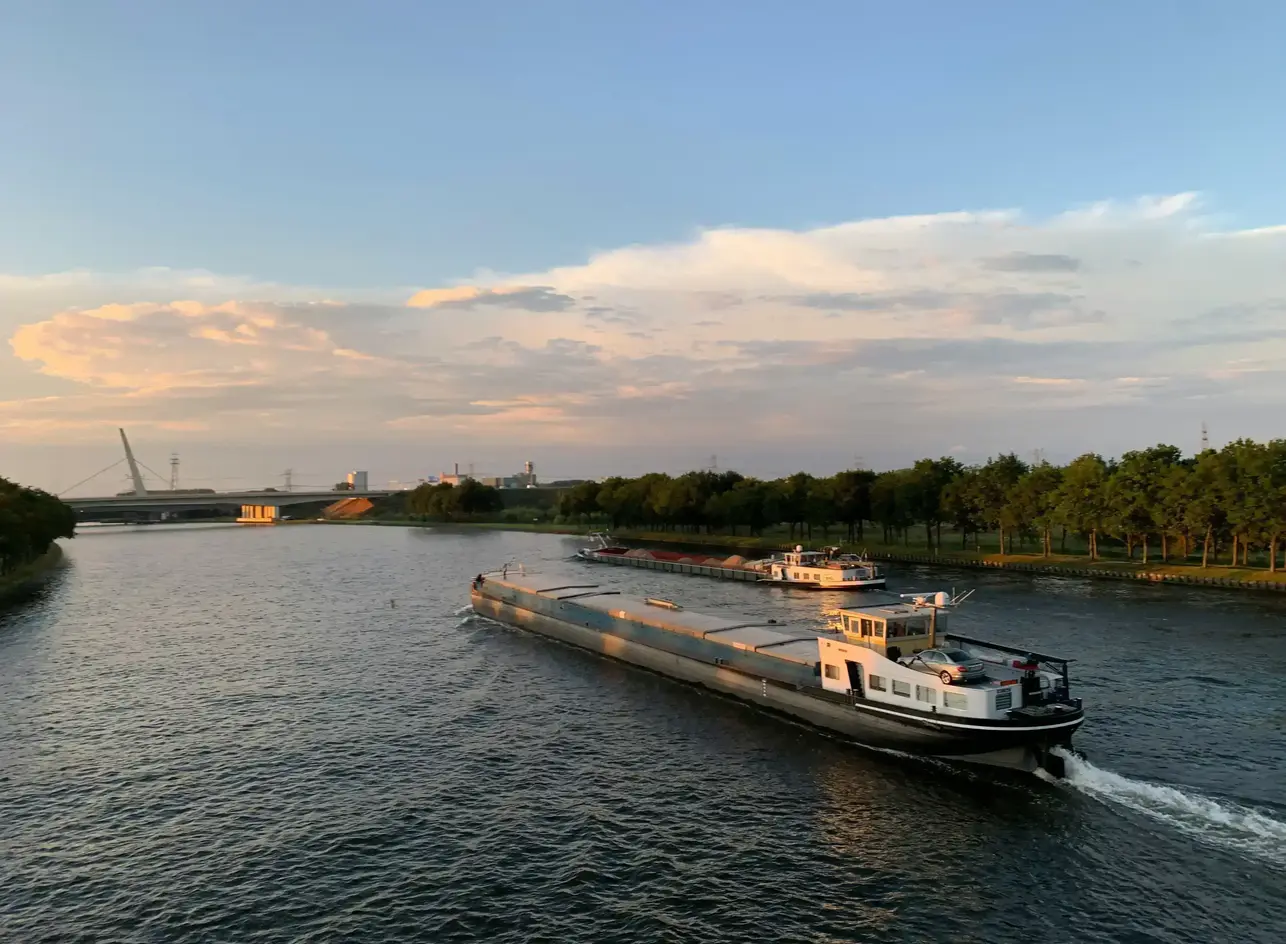
Your container from Shanghai is sitting in the port of Rotterdam. The last hurdle: how do you get it to its final destination in Venlo? The default choice, the truck, increasingly feels like a gamble. Traffic jams, unpredictable waiting times at the terminal, and a glaring driver shortage make the last few kilometers an expensive and uncertain part of the journey. But what if the smartest route doesn't run over asphalt, but over water? The question is no longer truck or barge. The question is: when do you choose the predictability and lower costs of water transport, without giving up control?

.webp)
The costs: why barging is often cheaper
A calm journey is nice, but as a supply chain manager, you want to see the numbers. Let's debunk the myths around barging with a concrete calculation.
Say you have three 40ft containers (FCL) that need to travel from Maasvlakte to a warehouse in Venlo.
- Scenario 1: three separate trucks
- Freight rate per truck: €350
- Waiting costs (detention & demurrage): €75 per truck (conservative estimate)
- Fuel surcharges: approx. €50 per truck
- Total: (350 + 75 + 50) x 3 = €1,425 per truck
- Scenario 2: barging + last-mile truck
- All-in rate per container (terminal, sailing): €220
- Short, plannable last-mile trip (from inland terminal Venlo): €110 per container
- Total: (220 + 110) x 3 = €990 per container
A direct difference of €435. With larger volumes, this advantage quickly adds up to thousands of euros. You avoid the unpredictable waiting costs at the sea terminal and benefit from the efficiency of transport over water. These aren't assumptions; these are the calculations we regularly make for our customers.
* Disclaimer: The figures above are purely illustrative and serve as a calculation example. Rates are volatile and fluctuate daily based on market conditions, fuel prices, specific routes, and volumes. No rights can be derived from this example. For an exact price for your shipment, we recommend running an up-to-date calculation on our platform.
Forget speed, choose predictability
A truck, on an empty road, gets from A to B faster. Sure. But when is the road around a major port ever empty? Unpredictability is the Achilles' heel of road transport.
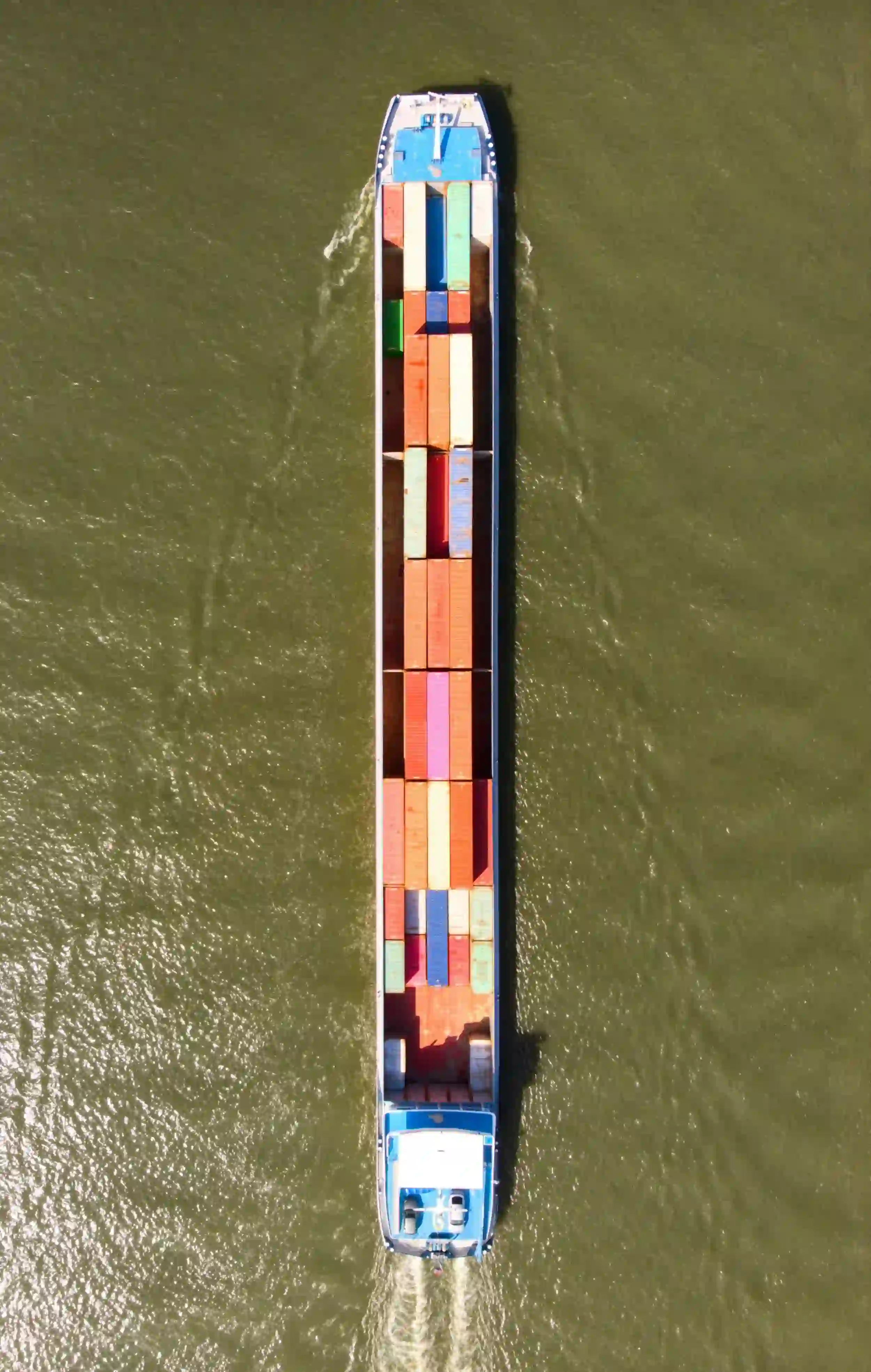
A barge might take 18 hours, but they're 18 planned hours. You know exactly when the container will arrive at the inland terminal. This lets you plan your staff and equipment efficiently for unloading. For a tight supply chain, that predictability is often worth more than the theoretical top speed of a truck.
Of course, for an urgent shipment that needs to go straight from the quay to the production line, the flexibility of a truck is unbeatable. But for the remaining 80% of shipments, combining with barging is simply the smarter choice.
Stop puzzling it out: the complexity is gone
The reason many importers are wary of barging is the traditional complexity. It used to be a logistical maze: calling a separate barge operator, coordinating the transshipment, and just hoping all parties communicate well. That's a thing of the past.
On Cargoplot's platform, you don't just book your sea freight; you plan the entire route straight to your door. On our platform, you weigh the options based on your priorities (cost, speed, or sustainability), and we proactively advise you on the smartest route. The result isn't an endless list of options, but clear, strategic advice:
- Option 1 (Focus: speed): Delivery tomorrow by road. Cost: €475.
- Option 2 (Focus: cost): Delivery the day after tomorrow via barging + truck. Cost: €330.
No separate parties, no hidden costs. One point of contact and total control. With a single click, you choose the route that fits your schedule and budget. We handle the seamless execution.
Conclusion: make the smart combination
The smartest importers don't choose. They combine. By viewing sea freight and barging as an integrated system, you win on every front: you lower your logistics costs, increase the reliability of your planning, and reduce your environmental footprint. The complexity of the past is gone. The strategic advantages are there for the taking.
Truck or barge? Compare costs and planning instantly. Save money, avoid waiting times, and optimize your logistics.
Frequently asked questions about barging for last-mile transport
Why should I choose barging instead of a truck?
Trucking is increasingly seen as a gamble due to traffic jams, unpredictable waiting times at terminals, and a driver shortage. Barging, on the other hand, offers more predictability and often lower costs, without you losing control.
Is barging cheaper than road transport?
In many cases, yes. In the calculation example for three 40ft containers from Maasvlakte to Venlo, the combination of barging and a 'last-mile' truck is €435 cheaper than three separate trucks. This is because you save on expensive waiting costs (detention & demurrage) and benefit from lower transport costs over water. One small caveat is that no delays occurred in this example.
Isn't a truck a lot faster than a ship?
On an empty road, a truck is faster. A ship, for example, takes 18 hours. However, due to congestion around ports, road transport is unpredictable. The strength of barging lies precisely in its planned arrival time. This means you know exactly when the container will arrive and can plan unloading efficiently.
So when should I still choose a truck?
For urgent shipments that need to go straight from the quay to the production line, the flexibility of a truck remains unbeatable. For the remaining shipments (roughly 80%), barging is often the smarter choice.
Is arranging barging very complicated?
It used to be a complex process involving many different parties, but that's a thing of the past. Through platforms like Cargoplot, you book the entire route (sea and barge transport) in one go. You get instant insight into the options (speed vs. cost) and have a single point of contact for the entire route, right to your door.
Related content


Sign up for more supply chain insights:
No spam, just knowledge.