When is an air freight pallet the smartest choice?
Container stuck in the port or opting for a fast flight? It seems like a choice between evaporating your margin on high transport costs or structurally missing out on revenue due to delays. Knowing when the speed of air freight outweighs the costs of sea freight is the difference between a successful launch and a stock shortage. In this article, you will discover when an air freight pallet shipment is strategically the better option. We dive into the calculation of the 'Total Cost of Delay', technical limitations, and ROI, so you can make a choice that safeguards your profitability.
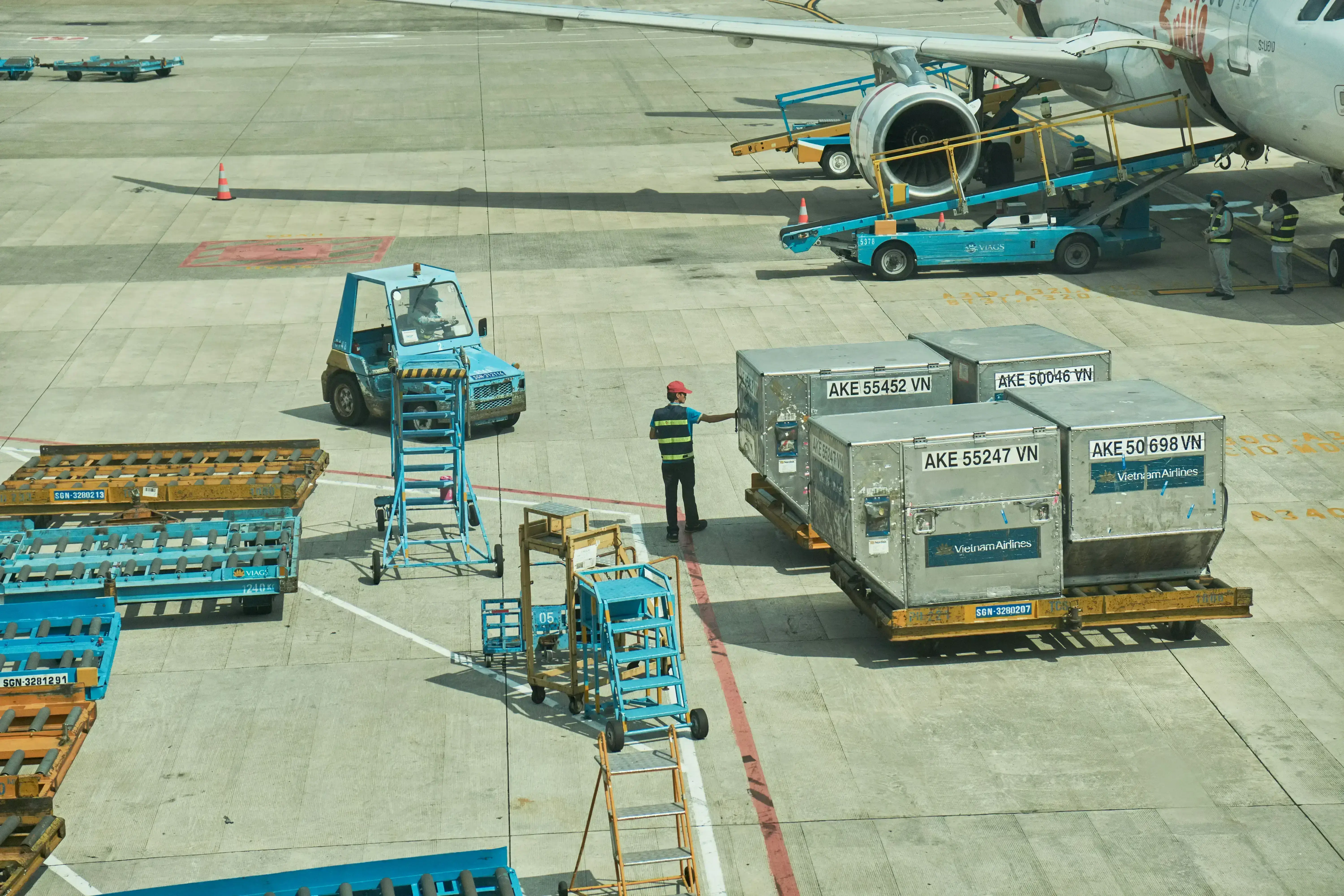


Air freight pallet or sea freight: The hard numbers
Of course, on paper, it's a no-brainer. Sea freight is the undisputed budget king. But to make a good choice, you need to look further than just the invoice.
- Sea freight (Asia-Europe): 30-45 days transit time for approximately €1-€2 per kg.
- Air freight (Asia-Europe): 3-6 days transit time for approximately €6-€10 per kg.
Most importers contrast €350 for sea freight against €1,800 for air freight, and the choice seems easily made. But beware: with air freight pallet rates, weight and distance are not the only factors; volume is also crucial.
How are air freight pallet rates determined?
The costs for your shipment are calculated based on the chargeable weight. This is the higher value of either the actual weight or the volumetric weight (length x width x height / factor). Additionally, the final invoice consists of a base rate supplemented by surcharges such as fuel (BAF), security, and local handling costs.
Maximum air freight pallet height and dimensions
A crucial factor in planning is the maximum air freight pallet height. This limit depends heavily on the aircraft type:
- Passenger aircraft (PAX): Here, the height is often limited to 160 cm because the cargo must fit in the lower hold (the 'belly').
- Cargo aircraft (CAO / Freighters): These aircraft are built for cargo and can handle larger units, where pallets can often go up to 240 cm or higher.
- Standard formats: Usually, work is done with Unit Load Devices (ULDs) or Euro pallets (80 x 120 cm). If your pallet exceeds the maximum height of a PAX flight, you are dependent on the more expensive cargo aircraft.
Calculate the impact of delay
When does the 'expensive' option suddenly become the most profitable? As soon as the costs of delay turn out higher than the additional costs of air freight. Calculate it using these four variables:
- Lost gross margin: The profit (not revenue) you miss out on for products you cannot sell.
- Wasted marketing spend: The money for campaigns that goes up in smoke when customers hit a 'sold out' button.
- Opportunity costs: The return you miss out on because your working capital is stuck at sea instead of working for your business.
- Reputational damage & fines: Contractual fines from retailers, the loss of shelf space to a competitor, and the declining trust of your customers.
Calculation example: How €1,450 extra transport costs saves €7,500 profit
Suppose you want to send a pallet of consumer electronics for a trade fair. These are goods where timing is crucial.
- Pallet value (purchase): €15,000
- Expected gross margin at the fair: €7,500
- Sea Freight Costs: €350
- Air Freight Costs: €1,800
- Difference in transport costs: €1,450
The arrival time for sea freight is tight. One week of delay and you miss the fair. The Total Cost of Delay here amounts to at least €7,500 in lost profit. The question is therefore not: "Do I want to pay €1,450 extra for transport?" The question is: "Do I want to pay an insurance premium of €1,450 to secure €7,500 in certain profit?" Then the choice is quickly made.
Disclaimer: The amounts and rates mentioned in this calculation example are fictional and serve for illustration purposes only. No rights can be derived from them.
4 scenarios for strategic air freight
When is the choice for the plane obvious?
- The seasonal collection: You sell swimwear. Miss the first heatwave and your entire seasonal margin is at stake.
- The unexpected bestseller: A product goes viral. Every day you have to say 'no' to a sale, you give away momentum and customers to the competitor. Air freight is the fastest way to replenish stock.
- High-value, lightweight goods: For luxury watches or microchips, transport costs are a fraction of the product value. The certainty and speed far outweigh the extra costs.
- Critical spare parts: A machine is at a standstill. Every day of downtime costs tens of thousands of euros. That extra €1,000 to fly in a part then pales in comparison.
From reactive importing to supply chain control
The choice between sea- and air freight is a strategic risk analysis. By understanding your Total Cost of Delay, you change from a reactive importer into a proactive supply chain strategist.
At Cargoplot, we give you the data to perform that analysis. On our platform, you can directly compare rates, transit times, and carriers for sea, air, and even rail freight. We believe in transparency so much that we even show our margin. This way, you are guaranteed to make the best choice for your business.
Compare rates and transit times directly for your next shipment. Whether it's sea freight or an urgent shipment by air, at Cargoplot you'll see exactly where you stand.
Frequently asked questions about air freight pallets
How much faster is shipping a pallet by air freight compared to sea freight?
Air freight from Asia to Europe has a transit time of 3 to 6 days, compared to 30 to 45 days for sea freight.
What should I look out for regarding the maximum height of an air freight Pallet?
The maximum height depends on the aircraft type. For passenger aircraft, the limit is often 160 cm. For cargo aircraft (freighters), the pallet can often be higher, sometimes up to 240 cm.
When is air freight economically more interesting than sea freight?
Air freight is the smartest choice when the "costs of delay" (such as lost profit, reputational damage, or machine downtime) are higher than the additional price of transport. This often applies to seasonal products, hypes, or critical parts.
How are the rates for an air freight pallet calculated?
Rates are determined based on the 'chargeable weight': the higher value of either the actual weight or the volumetric weight. Surcharges for fuel, security, and handling are added
to this.
What does it cost to ship a pallet via air freight?
Costs vary greatly by route, weight, and volume. For a shipment from Asia to Europe, you can count on an average of approximately €6 to €10 per kilogram.
Related content



Sign up for more supply chain insights:
No spam, just knowledge.