Sea Freight, For Any Volume
Ship full container loads (FCL) and less-than-container loads (LCL) from any supplier straight to your door. With sea freight transport, you compare all carriers, sailing dates and rates in one overview, and find the right balance yourself between speed, cost and reliability.

Our Sea Freight Carriers
Choice and transparency are at the core of Cargoplot. You can always choose exactly who you ship with.






What Is Sea Freight?
Sea freight is the transport of goods by container ship, usually between major seaports such as Shanghai, Rotterdam, Hamburg and Antwerp. With transport by sea, you move larger volumes at lower cost than air or rail freight, in exchange for a longer transit time.
Sea freight is the best choice for companies shipping large quantities of goods, especially over long distances. If you're moving a large volume, sea freight is significantly cheaper than air freight. Companies importing bulky goods, raw materials, or large quantities of finished products often find sea freight the most cost-effective option.
Not sure which mode of transport to choose? Sea freight is the best choice if you're not under time pressure and want to save on costs. If your shipment contains liquid or a battery — think hydraulic oil in machinery — air freight comes with very strict Dangerous Goods rules, making sea freight the safer option too. Compared to rail freight, sea freight has a major advantage: a ship can be tracked step by step via the Cargoplot platform, while rail freight has no tracking and the ETA often remains unclear.

| From | To | Shipment Size | Booked |
|---|---|---|---|
“Before it was also always a little bit dodgy… you get prices but you don't know with whom they're booking it exactly. Cargoplot gives you that transparency.”

International sea freight
With sea freight you optimize your margins, at the cost of a slightly longer lead time. With options for both Full Container Load (FCL) and Less than Container Load (LCL), sea freight suits shipments of any size, making it accessible for both large and small companies importing or exporting on the global market.
On average, a sea freight shipment takes 4 to 6 weeks: around 30 days when ships sail via the Suez Canal, and 40 to 50 days when a ship cannot take that route. That's longer than rail freight (2 to 3 weeks) or air freight (7 days on average), but in exchange you pay less and have more time to get your documents in order.
With international sea freight from Asia, more is involved than just the voyage itself: customs handling and documentation also determine how predictable your lead time is. A common cause of delay is a physical customs inspection, also known as FYCO. Specific documents can also throw a wrench in the works — for example, a phytosanitary certificate for certain types of wood such as spruce, needed to prevent unwanted organisms from entering the EU. If you work with multiple suppliers in a single shipment, the risk of delay increases, since customs then has to check multiple packing lists and documents. Via the Cargoplot platform, you track every step of your shipment, so you see a delay coming in time instead of finding out after the fact.
What does a sea freight forwarder do?
A traditional sea freight forwarder often works with limited transparency: you get a rate, but not always insight into which carrier, which route, or which costs are behind it. Cargoplot fulfils the same role through its digital platform — except you do get the insight you need: you see every available carrier, sailing date and price yourself, and choose who you ship with.
A human point of contact also remains available during booking and while your shipment is underway. You manage tracking, customs and forwarders via the Cargoplot platform, with your own account manager and operations specialists ready to help whenever you have questions.

Get An Instant Quote for Your Sea Freight


From the World to Your Warehouse in a Few Clicks

Create And Compare Quotes
Get prices for shipments between all major hubs in Asia, North America and Europe. Compare prices, shipping times, reliability metrics, and make an informed shipping decision.
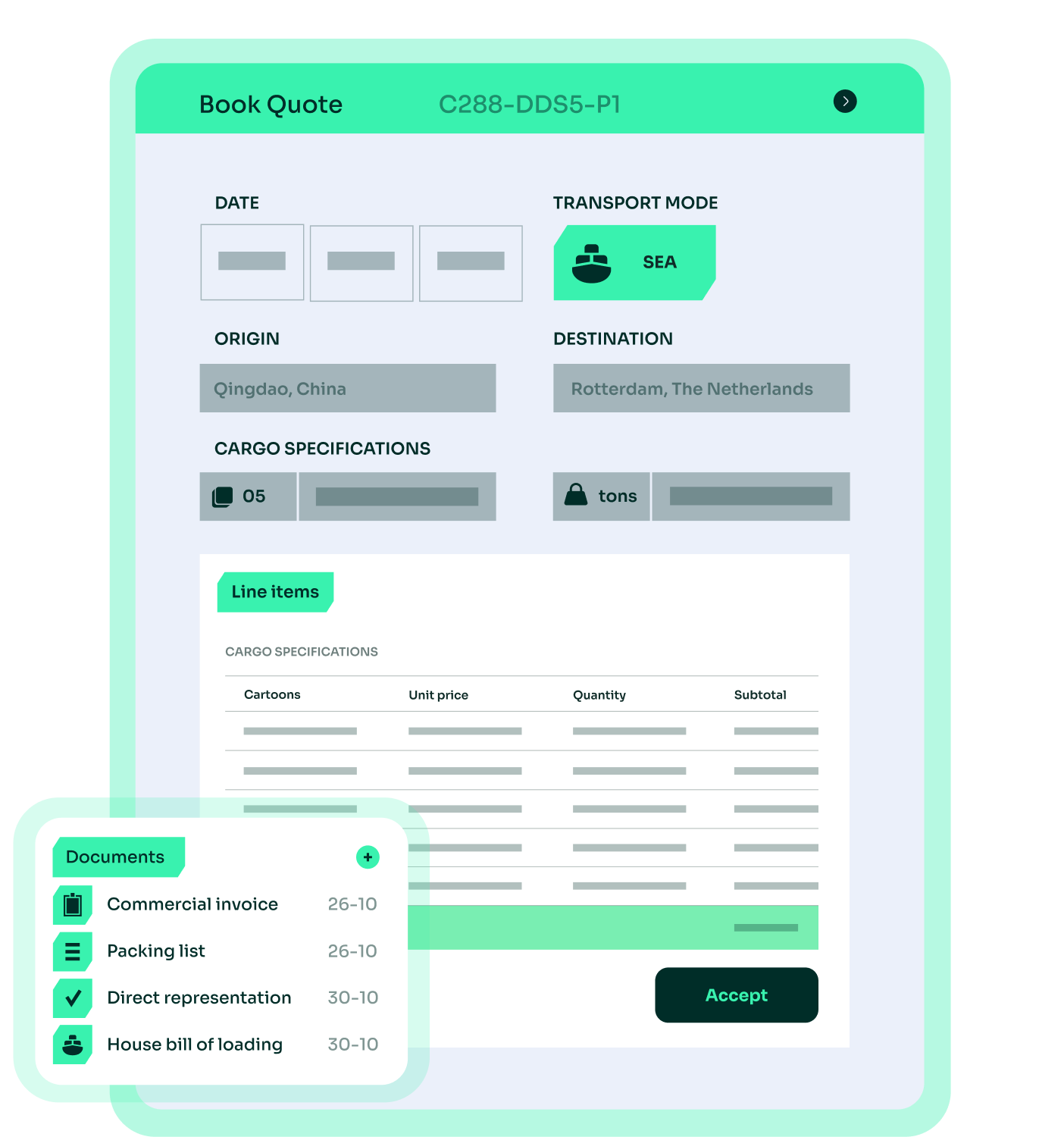
Book In A Few Clicks
Once you find an option you like, booking it is as simple as booking a plane ticket. We’ll need a few details to facilitate the process, and we’ll lock in your rate for your cargo ready date.
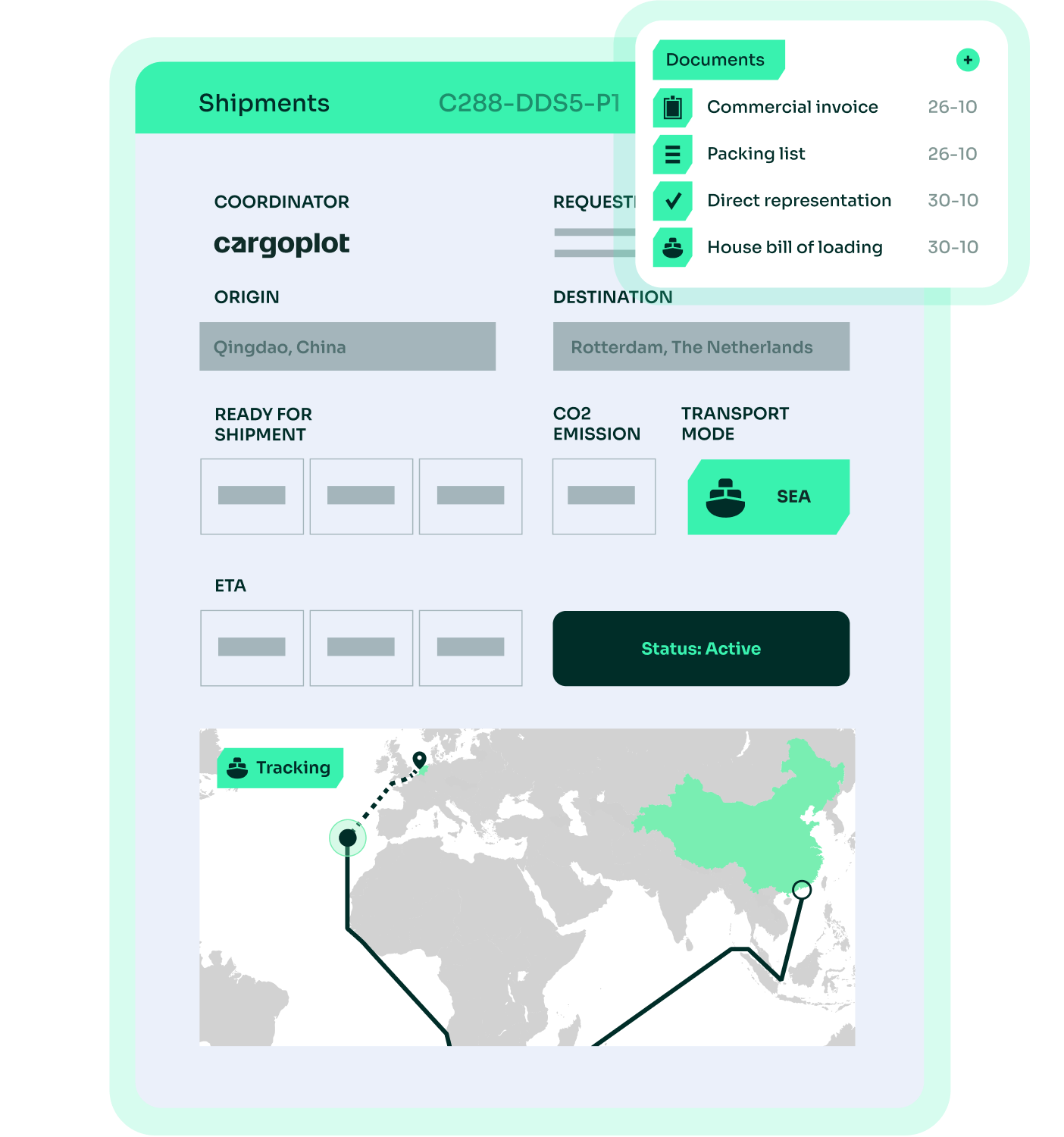
Manage Shipments And Get Support
Tracking, customs, shipping agents... everything is managed through the Cargoplot platform. Your dedicated account manager and our operation specialists are also ready to help anytime.
In Our Customer’s Words:
%20(1)%20(1)%20(1)%20(1).webp)

"What I really like at Cargoplot is that I can see the total price for all the costs... With others, you don't have a total picture. For me, it's very, very important to see what the total price is for the full shipment."


Frequently asked questions about sea freight
Everything you need to know about sea freight: from costs and transit times to the differences between FCL and LCL.
What is sea freight?
Sea freight is the transport of goods by container ship between seaports. It's the most cost-effective way to import or export large volumes, especially over long distances such as from Asia to Europe. In exchange for a lower price, you accept a longer transit time than with air or rail freight.
How much does sea freight cost?
The cost of sea freight transport depends on the route, volume (FCL or LCL), and current market demand. Over recent years, on average and excluding extremes, a container costs between $1,300 and $7,000. With Cargoplot you compare rates from 25 carriers directly, so you always see the current market rate.
What's the difference between FCL and LCL?
With FCL (Full Container Load) you rent an entire container, ideal for larger volumes. With LCL (Less than Container Load) you share a container with other shipments, which is more cost-effective for smaller volumes. The tipping point today sits around 20 CBM on average, but depends heavily on your specific goods and current container prices. Calculate your rate to see what works out best for your shipment.
How long does sea transport take?
Transit time depends on the departure and arrival port. On average, sea freight takes 4 to 6 weeks — around 30 days via the Suez Canal and 40 to 50 days if a ship doesn't take that route. On the Cargoplot platform you see the expected sailing time directly with every quote.
What does a sea freight forwarder do?
A sea freight forwarder arranges transport between shipper and carrier, including documentation and customs handling. Traditionally, this comes with limited visibility into rates and choices. Cargoplot fulfils this role digitally: you see every carrier and price yourself, with human support from an account manager when you need it.
How does international sea freight from Asia work?
International sea freight from Asia runs via major ports such as Shanghai, Ningbo and Shenzhen to European ports such as Rotterdam, Hamburg and Antwerp. In practice, delays mostly come from customs checks, such as a physical inspection (FYCO), or from missing documents such as a phytosanitary certificate for certain types of wood. If you work with multiple suppliers in one shipment, this risk goes up. On the Cargoplot platform you keep every step in view, so you're not caught off guard by a delay you didn't see coming.