Shipping from Singapore to Rotterdam
What shipping from Singapore to Rotterdam actually looks like: why 90% of Singapore's throughput is transshipment, and what genuine Singapore-origin cargo means for your booking.

month-over-month
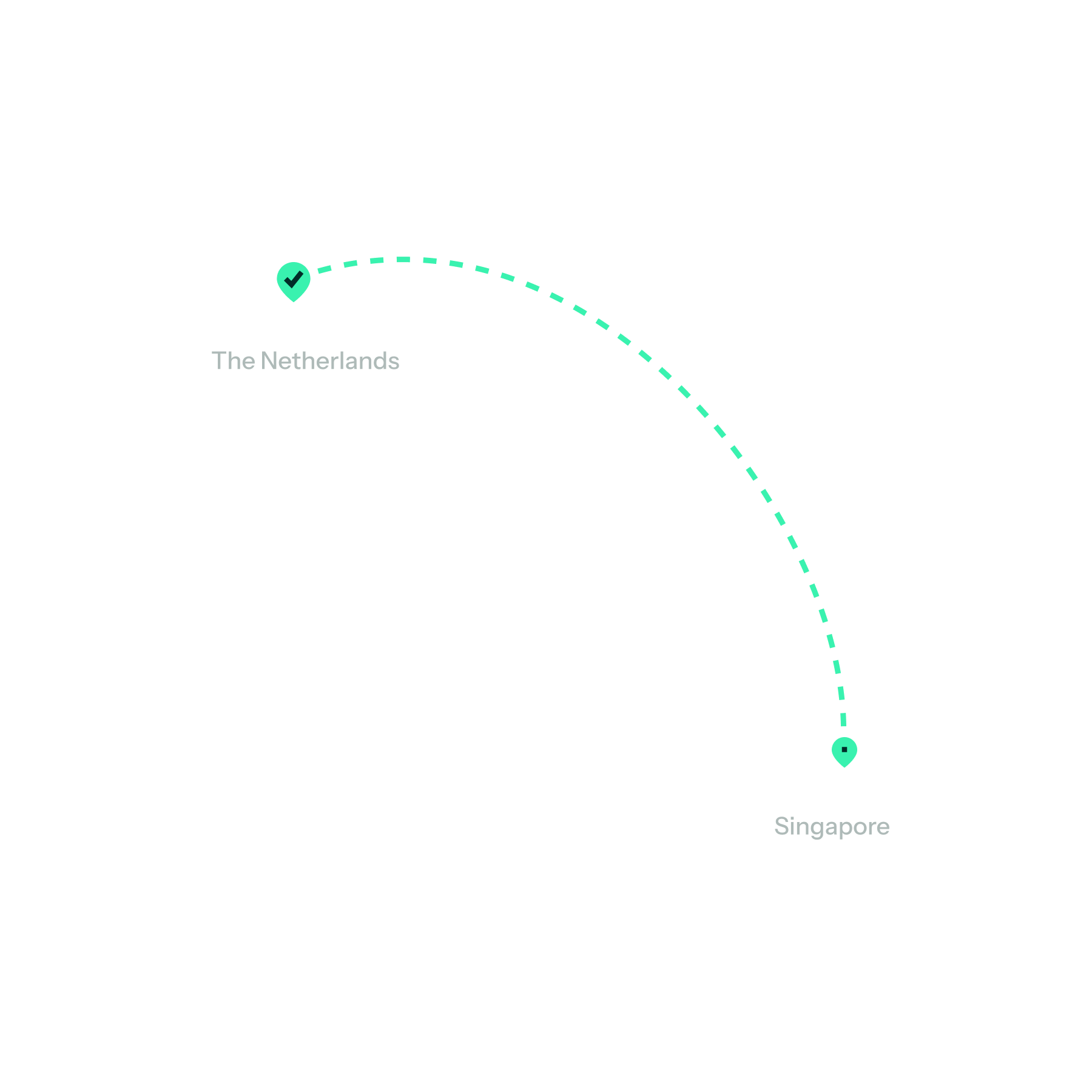
Port of SingaporetoPort of Rotterdam
Shipping from Singapore to Rotterdam starts at one of the most automated port complexes in the world. PSA's terminals moved a combined 44.5 million TEU in 2025, with container operations consolidating into the new Tuas Port — targeted for 65 million TEU capacity by 2040, run largely by automated guided vehicles.
At Rotterdam, deep-sea berths run to 20 metres, but Cargoplot has no completed shipment on this lane to benchmark clearance against — the one shipment on record hasn't arrived yet. Petrochemical cargo typically continues toward Rotterdam's own chemical cluster, while pharma and electronics move onward by road. Every consignee still needs an EORI number.
Genuine Singapore-origin cargo, unlike cargo transshipping through it, leans toward petrochemicals, biologics and semiconductors — industries a freight forwarder handles differently from general merchandise, which is why transit time here looks nothing like a typical sea freight lane.


Historical Rate Trends & Transit Metrics
Multi-year sea freight pricing fluctuation alongside average transit times and port delay performance for Singapore to Rotterdam. Currently the average shipping price is $4,900/FEU.
Historical sea freight prices for this route

Operations & Route Performance Review
Analyze weekly port congestion, container type availability, shipment mode breakdowns, and historical transit duration trends to optimize logistics planning.
Weekly Delay & Congestion
FCL vs LCL
With only one shipment ever recorded on this lane — still in transit, not yet cleared — there's no meaningful FCL/LCL split to report. That's consistent with Singapore's role: roughly 90% of its container throughput is transshipment cargo credited to its true origin port. Genuine Singapore-origin freight, like petrochemicals or semiconductor components, tends to move FCL given the cargo values involved. Given that, the usual ~20 CBM breakeven typically works in FCL's favor once your cargo clears Singapore's transshipment noise. Cargoplot's platform tracks your shipment by its true origin, not its last transshipment stop.
Container Types & Cargo Restrictions
Singapore-origin cargo often needs specialized handling more than most lanes: petrochemicals typically ship under IMDG dangerous goods classification, while pharmaceuticals need GDP-compliant, temperature-controlled containers. Misclassify either and the fallout is real — a customs hold, or for chemicals, a straightforward refusal to load.
Monthly Transit time Trend
Compare top ocean carriers on speed, schedule reliability, and average freight costs to select the best partner for your lane. For Singapore to Rotterdam
Average price by carrier
Incoterms & Documentation
Singapore-origin shippers — often trading companies or manufacturers — sometimes quote EXW or FCA instead of FOB or CIF, a reflection of Singapore's role as a regional distribution point rather than a single-factory origin. Confirm which Incoterm actually applies before booking, since sellers here vary more than most origins. Where FOB is on the table, it's Cargoplot's recommendation, and booking it through us gets you freight, terminal handling, customs and inland transport priced as separate lines rather than one supplier number.
Standard EU import documents apply: Bill of Lading or Telex Release, Commercial Invoice, Packing List, EORI number and HS codes. Chemical shipments need a REACH registration confirmed by the EU importer before customs will release them; pharma shipments need GDP-compliant handling
Ask about Article 23 if you're importing into the Netherlands: it defers this VAT to your periodic return rather than the border. Our Article 23 guide covers the requirements.
Cargoplot's platform flags REACH and GDP documentation requirements at booking, so specialized cargo from Singapore clears without surprises.
Rates calculator
Get a real-time benchmark for this lane. Rates pull from contracted carrier tariffs plus current spot indices.


"The ability to see all our options laid out clearly allows us to be agile. If a supplier is running late, we can instantly pivot to a faster shipping line. That flexibility is invaluable and protects our sales."

Complete control over your international freight
Cargoplot provides full transparency on shipping rates, transit times, and carrier reliability. Compare live offers, streamline documentation, and manage all your containers in one clear dashboard.

Instant Comparative Quotes
Access live rates and schedules from 50+ major carriers instantly, refreshed in real time.

Global Multimodal Network
Full coverage across sea, air, and rail freight between major global trade hubs.

AI Document & Tracking Control
Eliminate manual busywork with AI document processing and 24/7 container tracking.

100% Fee & Cost Transparency
Itemized cost breakdowns with zero hidden surcharges—we even show you our exact margin.
FAQs
Lorem ipsum dolor sit amet, consectetur adipiscing elit. Suspendisse varius enim in eros elementum tristique.
What is the average transit time from Singapore to Rotterdam?
What does a 40' container on this route cost right now?
What documents do you need specifically for a shipment from Singapore?
The baseline EU documents apply here too: BL/Telex, invoice, packing list, EORI, HS codes (full breakdown here). Chemical cargo through Singapore needs a REACH registration confirmed by the EU importer before customs release, and pharma shipments need GDP-compliant handling documentation.
What is Tuas Port, and why does it matter for cargo shipped from Singapore?
Tuas Port is where PSA is consolidating its container operations, targeting 65 million TEU of capacity by 2040 and run largely by automated guided vehicles. For genuine Singapore-origin shippers — as opposed to cargo simply transshipping through the island — it's the infrastructure that will increasingly handle your booking as the terminal build-out continues.
My cargo transshipped through Singapore — should I book it as a Singapore shipment?
No. Book and declare it under its actual country of origin. Singapore only appears as a transshipment waypoint on the routing, not as the country of origin on your commercial invoice or customs paperwork.
I have real Singapore-origin cargo — what should I expect?
Expect specialized handling: IMDG dangerous goods rules for petrochemicals, GDP cold-chain documentation for pharma. These shipments typically move through carriers and processes built for hazardous or temperature-sensitive cargo, not standard general-merchandise routing.
How does customs clearance work on arrival in Rotterdam?
Cargoplot’s customs agent files your import declaration in the Netherlands via Direct Representation. Once approved, you get a TTW releasing the container to your transport partner. Full process in our import guide; duties and VAT thresholds here.
What is the Article 23 permit and do I need one?
Article 23 is a Dutch permit that lets you defer import VAT to your periodic return instead of paying at customs clearance — meaningful cash flow if you import regularly. You’ll need a Dutch VAT/EORI registration. Full explanation in our Article 23 guide.