Shipping from Port Klang to Rotterdam
Westports runs Malaysia's first fully automated terminal system, part of a gateway that handled 14.64 million TEU in 2024 — shipping from Port Klang to Rotterdam is tracked weekly with Cargoplot's live carrier benchmarks and pricing data.
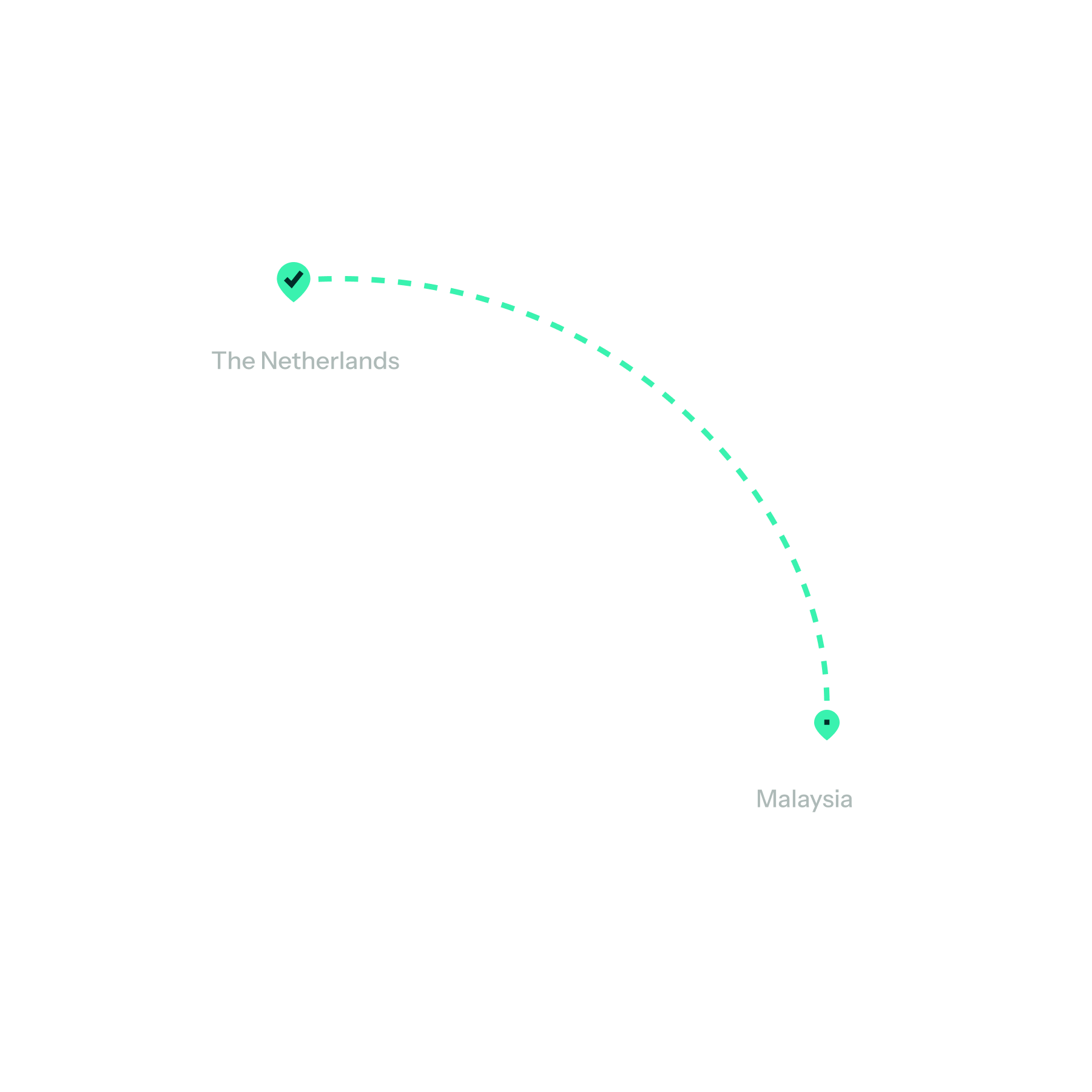
Port of Port KlangtoPort of Rotterdam
Shipping from Port Klang to Rotterdam starts at Malaysia's busiest container gateway, which handled 14.64 million TEU in 2024 across its Westports and Northport terminals. Westports runs 16-metre berths and Malaysia's first fully automated terminal operating system, making it the natural sea freight loading point for the country's electronics-heavy export base.
At Rotterdam, deep-sea berths run to 20 metres, and according to Cargoplot's data, average import clearance on this lane runs 1.24 days. Electronics and machinery typically continue by rail toward Germany's industrial centers, while palm oil derivatives and rubber goods move to Benelux processing and distribution hubs. Every consignee needs an EORI number to clear customs.
Integrated circuits and electronics dominate this lane, reflecting Malaysia's export mix, and Cargoplot's data shows transit time and booking patterns still building here — this is one of Cargoplot's newer freight forwarder routes between Malaysia and the Netherlands.


Historical Rate Trends & Transit Metrics
Multi-year sea freight pricing fluctuation alongside average transit times and port delay performance for Port Klang to Rotterdam.
Historical sea freight prices for this route

Operations & Route Performance Review
Analyze weekly port congestion, container type availability, shipment mode breakdowns, and historical transit duration trends to optimize logistics planning.
Weekly Delay & Congestion
FCL vs LCL
According to Cargoplot's data, 100% of Port Klang shipments tracked so far book as FCL, with zero LCL. At this volume, Cargoplot's data can't yet support a reliable container-type split, so we're not reporting one rather than guessing. FCL usually wins past roughly 20 CBM, though the real breakeven shifts with your goods and current container pricing. Cargoplot's platform shows live rates for this route as more volume builds.
Container Types & Cargo Restrictions
Standard 20' and 40' dry containers handle most Port Klang cargo, with reefers on request only, reflecting Malaysia's electronics-heavy export mix. Moisture and static control is the restriction that matters most here: integrated circuits and other electronics need proper desiccant packing and anti-static wrapping, since humidity damage during a five-to-six-week transit isn't always visible until the cargo is unpacked. Any lithium-battery components inside finished electronics also need a UN38.3 test summary and correct dangerous goods declaration before booking. The two risks play out differently: undeclared battery cargo gets held, while moisture-damaged electronics can be rejected by the buyer on arrival. Tell us your cargo type at booking so the packing and paperwork get sorted early — Cargoplot's documentation review checks the required fields on incoming battery and moisture-sensitive paperwork before it's uploaded to the platform, with customs partners handling any follow-up requests on compliance documents like the DG declaration.
Monthly Transit time Trend
Compare top ocean carriers on speed, schedule reliability, and average freight costs to select the best partner for your lane. For Port Klang to Rotterdam
Average price by carrier
Incoterms & Documentation
Choosing between FOB and CIF matters more on this lane than most, since Port Klang's electronics-heavy cargo is exactly the kind that exposes gaps in standard CIF insurance. Under FOB, your supplier's responsibility ends once goods are loaded, and Cargoplot arranges the ocean leg onward. Under CIF, the supplier also covers freight and insurance to Rotterdam — but standard marine cargo policies often exclude damage from moisture or improper packing, a risk for electronics on a multi-week sea voyage. Check what your policy covers before trusting it.
Malaysia's GSP eligibility with the EU ended in 2014, so a Port Klang Certificate of Origin is always non-preferential — standard MFN duties apply regardless. One quirk worth knowing: it's issued by a MITI-authorised chamber like MICCI, not by a government department directly. Round out the paperwork with the standard Telex Release or B/L, commercial invoice, packing list and HS codes for every shipment.
Deferring import VAT to your periodic return, instead of the border, is what an Article 23 permit gets Dutch importers — see our Article 23 guide.
Cargoplot's platform automatically requests and routes your invoice, packing list and origin documentation to the responsible party, with specialized customs partners checking origin documentation as this newer Malaysia route scales up.
Rates calculator
Get a real-time benchmark for this lane. Rates pull from contracted carrier tariffs plus current spot indices.


"The ability to see all our options laid out clearly allows us to be agile. If a supplier is running late, we can instantly pivot to a faster shipping line. That flexibility is invaluable and protects our sales."

Complete control over your international freight
Cargoplot provides full transparency on shipping rates, transit times, and carrier reliability. Compare live offers, streamline documentation, and manage all your containers in one clear dashboard.

Instant Comparative Quotes
Access live rates and schedules from 50+ major carriers instantly, refreshed in real time.

Global Multimodal Network
Full coverage across sea, air, and rail freight between major global trade hubs.

AI Document & Tracking Control
Eliminate manual busywork with AI document processing and 24/7 container tracking.

100% Fee & Cost Transparency
Itemized cost breakdowns with zero hidden surcharges—we even show you our exact margin.
FAQs
Lorem ipsum dolor sit amet, consectetur adipiscing elit. Suspendisse varius enim in eros elementum tristique.
What is the average transit time from Port Klang to Rotterdam?
How does customs clearance work on arrival in Rotterdam?
Cargoplot’s customs agent files your import declaration in the Netherlands via Direct Representation. Once approved, you get a TTW releasing the container to your transport partner. Full process in our import guide; duties and VAT thresholds here.
What is the Article 23 permit and do I need one?
Article 23 is a Dutch permit that lets you defer import VAT to your periodic return instead of paying at customs clearance — meaningful cash flow if you import regularly. You’ll need a Dutch VAT/EORI registration. Full explanation in our Article 23 guide.
What documents do you need specifically for a shipment from Port Klang?
Beyond the standard set — BL/Telex, invoice, packing list, EORI, HS codes (full list here) — Malaysia lost EU GSP status in 2014, so any Certificate of Origin from Port Klang is non-preferential, and unusually it's issued by MITI-authorised chambers like MICCI rather than a government department directly.
Does Malaysia have a trade agreement with the EU that reduces duties on Port Klang shipments?
No. Malaysia has no free trade agreement in force with the EU and lost its EU GSP preferential status in 2014, so standard MFN duties apply regardless of origin documentation. Any Certificate of Origin from Malaysia is non-preferential and won't reduce your duty rate.
What's the difference between Westports and Northport at Port Klang?
Westports runs Malaysia's first fully automated terminal operating system and handles the bulk of container volume on 16-metre berths — it's the terminal most electronics exporters load through. Northport is the older, smaller of the two. If your supplier hasn't specified which terminal your cargo loads from, it's worth confirming, since free time and cutoff schedules can differ between them.
My shipment is integrated circuits or other electronics — what should I watch for?
Moisture and static damage are the main risks on a multi-week sea voyage: use desiccant packing and anti-static wrapping. If any component contains lithium batteries, you'll also need a UN38.3 test summary and dangerous goods declaration before booking — sort this out before the container is packed, not after.